Wednesday, March 16, 2011

BlackBerry Pearl : Specs | Price | Reviews | Test

0 comments

BlackBerry Pearl : Specs | Price | Reviews | Test The Pearl is RIM's first smartphone with support for playing music and video, plus it has a built in camera. Brighthand's Editor-in-Chief. Though nothing revolutionary, the addition of multimedia features and the already solid e-mail capabilities make the RIM Blackberry Pearl an attractive. RIM put the Blackberry on a diet, and now it's looking slim and sexy. It even learned some new tricks - like how to take pictures and play music. This device has been a long time coming. Since we first heard about the device way back, it has been on the list of original Pearl form factor fans every.  The BlackBerry Pearl has good looks and plenty of power where it counts. With it's compact keyboard it might not be for you however.

While some have moved on to other devices, simply due to lack of patience in waiting for the next generation Pearl others have stayed true to the Pearl form factor. For me, The BlackBerry Pearl. This device has been a long time coming. Since we first heard about the device way back, it has been on the list of original Pearl form factor fans every. While some have move. This device has been a long time coming. Since we first heard about the device way back, it has been on the list of original Pearl form factor fans every. While some have moved on to other devices, simply due to lack of patience in waiting for the next generation Pearl others have stayed true to the Pearl form factor. For me,the BlackBerry Pearl 8100 series smartphone was the device that brought me into the BlackBerry world.

BlackBerry Pearl : Specs | Price | Reviews | TestAll devices before the Pearl looked bulky, aged and just unappealing. That is, until that fine day in September of 06' when the BlackBerry Pearl 8100 was exclusively released on T-Mobile then making it's way across carriers a short time after. Finally, after all this time we now have a fresh, newly styled and more powerful BlackBerry Pearl with 3G. Read on after the jump for my thoughts on the new Pearl and to find out if the joy of the original Pearl series was restored with the BlackBerry Pearl.

The Unboxing Process:

You'll have the excuse the video. It was only my second video in over two years. But I promise they will get better as I go along. You'll notice I failed to mention the dedicated media keys at the top. Below is what they look like.

BlackBerry Pearl : Specs | Price | Reviews | Test

Features And Specifications:

  • Elegant candybar design measuring 4.25" x 1.96" x 0.52" (108mm x 50
    mm x 13.3 mm) and weighing only 3.3 oz (93 grams)
  • 624 Mhz processor with 256 MB Flash memory
  • 360x400 sharp-resolution display (238 ppi)
  • Optical trackpad that makes navigation fast and smooth, plus a comfortable keyboard that enables quick and accurate typing
  • Media player for videos, pictures and music (music plays up to 30
    hours), plus dedicated media keys integrated along top of the handset
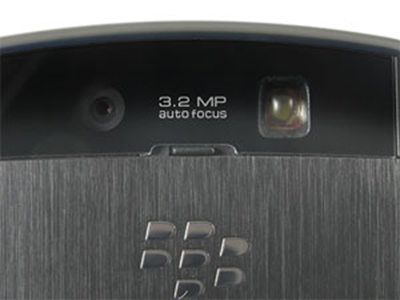
  • 3.2 MP camera with zoom, autofocus, flash and video recording*
  • Built-in GPS for location-based applications such as BlackBerry®
    Maps, as well as photo geotagging 
  • Wi-Fi (802.11 b/g/n) - first BlackBerry smartphone to support 'n'
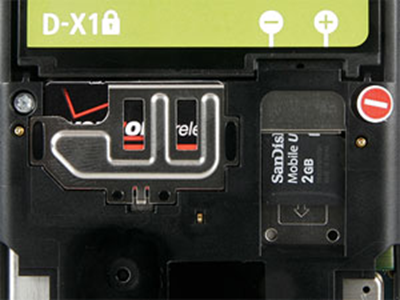
  • microSD/SDHD memory card slot that supports up to 32 GB cards
  • Premium phone features, including voice activated dialing,
    speakerphone and Bluetooth® (2.1) with support for hands-free headsets,
    stereo headsets, car kits (including systems that support the emerging
    Bluetooth Message Access Profile standard) and other Bluetooth
    accessories
  • Access to BlackBerry App World™, featuring a broad and growing
    catalog of mobile applications developed specifically for BlackBerry
    smartphones
  • Support for BlackBerry® Media Sync for easily syncing photos as well
    as iTunes® and Windows Media® Player music with the smartphone** 
  • BlackBerry® OS 5
  • Support for tri-band UMTS/HSDPA and quad-band EDGE/GPRS/GSM networks
  • Removable, rechargeable 1150 mAhr battery that provides
    approximately 5.5 hours of talk time on 3G networks.

My Thoughts On The Hardware:

BlackBerry Pearl : Specs | Price | Reviews | Test

The BlackBerry Pearl is sexy. There really is no doubt about it. It looks great and feels great in your hands and it has all the right curvatures in all the right places. If you are a person who was in love with the original BlackBerry Pearl smartphone then the BlackBerry Pearl is sure to please.

BlackBerry Pearl : Specs | Price | Reviews | Test

Given that the most notable addition here from the original Pearl series is the use of a trackpad over the trackball, some may find that change a slight bit of a challenge. Having both a BlackBerry Curve 8520 and a BlackBerry Bold 9700 I personally felt right at home with it. That's not to say I don't have some concerns with it though. For some reason, on the BlackBerry Pearl the trackpad felt slightly awkward to use. I do have my ideas as to why however. The keys on the BlackBerry Pearl are raised up above the trackpad. The trackpad itself feels more recessed into the device, almost so much that sometimes when running my finger over it I had to question if it was even there or if I was simply pressing on the escape key or menu key and on occasion even looking to see if that was indeed the case. No hindrance on use, just something that some of you out there may find as a quirk that is easily forgotten about over the initial hours of having the device.

BlackBerry Pearl : Specs | Price | Reviews | Test

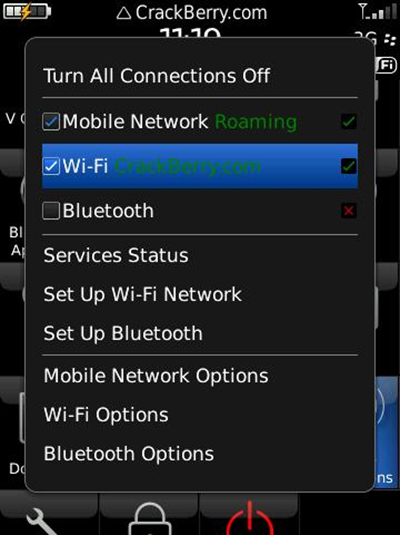
Again, not straying too far from the original BlackBerry Pearl series the BlackBerry Pearl does include Wi-Fi. This time around though, the wireless N protocol has been added. (something that was left out of the Bold 9650) The addition of wireless N is there to increase the speed of Wi-Fi data transfers and while I'm quite certain that I did notice some speed increase, given that I have capable hardware at home. I really cannot say that it was that much faster then any of my other devices. Connections were strong, Wi-Fi maintained and the device does not suffer from the feeling the BlackBerry Bold 9000 gives. That feeling being that the data is coming in faster then what the on board processor can handle. The BlackBerry Pearl chugs along nicely consuming data in the carrier friendly way that Mike Lazaridis touts in every speech. While still on the networking side of the device, the BlackBerry Pearl fairs quite nicely on my local Rogers coverage. I have had no problems with drop outs or dropped calls while making use of the Rogers 3G network.

Sadly one thing that the BlackBerry Bold 9650 did get that the BlackBerry Pearl 3G did not is the 512mb of flash memory. Instead, the BlackBerry Pearl 3G was left with only 256mb and while the device is snappy either way, for it to have 512mb would have been really, really nice. These days with the focus of consumers being on applications and feature rich content, the more memory on board the better. Plus, we're still left wondering what the scenario will be when BlackBerry 6 arrives on the scene. Will the Pearl 3G be able to handle it? Will it get a slimmed down version of BlackBerry 6? We're not positive on this stuff yet and that's quite bothersome not to know for certain.

Software:

Software is a very sticky point for me on the BlackBerry Pearl. I would love to come out and say that the OS matches the device perfectly and everything is bug free on the Rogers loaded 5.0.0.629. But it's not. While the problems I have seen have also been witnessed in other OS' I am left wondering as to how they were missed. Some folks may find it minor and just say I'm nitpicking but it is what it is. And it is a bug.

BlackBerry Pearl : Specs | Price | Reviews | Test

That side banner should not be like that. You should be able to view the icons on the side where that banner is just simply not rendering anything. Given that BlackBerry App World is not preloaded and is something that I personally downloaded I'm not really certain where the bug may be. Is it in App World or is it in the OS? All I can think of is the fact that this is an official carrier released OS and running an officially released version of BlackBerry App World, I should not be seeing these issues.

In case you didn't notice as well, my other gripe with the software is in that picture. Those are themes that are listed in BlackBerry App World. Yet, none of them are compatible with the BlackBerry Pearl. First, why am I being shown themes that are incompatible? Second, where are the tools to create themes for the BlackBerry Pearl 3G? With launches taking place across the world soon for the BlackBerry Pearl I guess users are just expected to use the pre installed theme until then? Only fair to note though, this is not a Rogers problem as this would be the case on any carrier and its something that Research In Motion needs to figure out.

Other then those issues, the OS is fairly snappy and responsive. All the typical items are preinstalled for you. Things such as brick breaker, Wordmole, Sodoku and Klondike. You also get all the Rogers options such as their "My Account" application, and the other virtual preloads they offer like Telenav, Zoompass and the odd game demo. In the end, no huge unexpected changes here nor anything that no other BlackBerry has. After all is said and done, out of the box you still have approx. 130MB of room left for apps and theme downloads.

To close out the software portion here. Let's talk about battery life considering that can be software related. The BlackBerry Pearl has a F-M1 battery that is noted as being 1150 mAhr. With that, the claims of 5.5 hrs of talk time on 3G are laid. I got the device at around 10:30AM here it is now, 11:10pm at night (AST) and the battery is almost dead. It's on its last LED flash. Very little web browsing, twitter or anything else besides emails has been in use today. Now given that my Bold 9700 can last all day then right into the next before requiring a new battery I'd say the BlackBerry Pearl is not the best but certainly not the worst. I have a Nexus One and it dies in 4 hours just sitting there.

Apps, Themes And Accessories:

BlackBerry Pearl : Specs | Price | Reviews | Test

As I had mentioned in the software portion of the review, something that may be considered a bad thing with purchasing a BlackBerry Pearl is the fact that we are still waiting for Research In Motion to give developers resources. Those resources needed come in the way of BlackBerry Theme Builder, as no developers can currently make themes for the device. Applications are quite a different story though, the developer tools for applications have been made available for a while now and most apps should support the BlackBerry Pearl. Of course, you can view those applications in BlackBerry App World. Just be sure to check compatibility before you make any purchases.

Accessories are always on the mind of new device owners. Cases, skins and screen protectors lead the way there. Discussions about BlackBerry® Pearl™ Series smartphones: 9100, 8100, 8200. BlackBerry® Accessories. Discussions about BlackBerry Accessories. Discussion topics regarding BlackBerry Themes & Animated Graphics. Discussion topics regarding testing BlackBerry applications, using BlackBerry simulators.

Closing Thoughts:

I like the BlackBerry Pearl. It really is a great device overall and I can see it fitting into many BlackBerry users lives. The keyboard (20 key version) is alright to use and while there is a small learning curve to getting the hang of it, it's easily overcome if you just go with the flow of it. While I'm not a huge fan of SureType, I can use it quite well once I get in the groove and stop caring that I'm using SureType.

Screen size may be an issue to those coming from a device with a larger screen on it but if you are a past Pearl user, you'll not have any issues here. The screen is bright and displays colours perfectly. Videos look great as well but I can no longer imagine watching a movie on a Pearl sized screen. Youtube clips, yeah but not a whole movie.

BlackBerry Pearl : Specs | Price | Reviews | Test

In regards to camera quality, it's pretty good. It's a 3.2MP camera that was designed for a mobile device. For quick pics of family and loved ones it will do. The autofocus really helps with increasing the quality of the pics and I'd place this one in line with the rest of the newer BlackBerry devices. And really, no one is buying a BlackBerry Pearl based on the camera anyways. (Note: In the above test shots, the 9100 fired it's flash and my 9700 did not. Despite both being set to automatic and no changes in lighting condition occured.)

The software issues on the device are minor. I pretty much challenge anyone out there to find an OS on any platform that is totally bug free. It just can't be done. I have a iPhone, I have a Nexus One and they all suffer from some issues that drive me nuts but that is the nature of the beast.

Call quality is something that is usually passed over in reviews. I like to save it for the last and while we all know these devices are capable of making phone calls, the fact is more and more people are moving away from calling and moving into data usage. That said, I did test the call quality on the BlackBerry Pearl and was quite satisfied with the results. People could hear me, I could hear them and nothing sounded tinny or hollow and  certainly no echoes. To me, that passes as standard successful phone call and the Rogers network in my area is great so no dropped calls.

In the beginning of this review I was thinking of original BlackBerry Pearl owners. Would a 8100 owner be happy with the brand new design of the BlackBerry Pearl? That was my personal basis for the review. Looking back on the past of when I used a BlackBerry Pearl 8100 I can safely say that most users will feel right at home with the BlackBerry Pearl. That is, if they haven't moved onto a full qwerty device because of the long wait for a the revamp. Since WES I have been really liking the BlackBerry Pearl and even reached the point where I could see myself possibly keeping it as my main device. After some dedicated time with it, I don't think I'll be giving up my BlackBerry Bold 9700 anytime soon for the SureType sexiness that is the BlackBerry Pearl. But, I will most certainly be adding it to my collection for those times when I need a change. As we mentioned in a previous post, the BlackBerry Pearl is available Rogers Wireless now.

BlackBerry Pearl Price

BlackBerry Pearl price is optimal and it is a great buy. Click here [via eBay]

Continue Reading

Tuesday, March 15, 2011

BlackBerry PlayBook 4G : Specs | Price | Reviews | Test

0 comments

BlackBerry PlayBook 4G : Specs | Price | Reviews | TestBlackBerry unveils its new PlayBook 4G Tablet in CES 2011 Las Vegas.The new PlayBook 4G tablet is RIM’s first tablet, and it is armed with high-end hardware Specs like dual-core 1 GHz processor, 1 GB of RAM, 7-inch 1024 x 600 capacitive touchscreen display , 5 megapixel camera on the back which can capture the 1080P HD Videos, 3 megapixel camera on the front for video conferencing, Wi-Fi, Bluetooth 2.1 + EDR wireless connectivity ,3G via tethering to a BlackBerry smartphone, and HDMI-out for direct connection to HD home TV and sports.

BlackBerry PlayBook 4G : Specs | Price | Reviews | Test

Review :

My first impression of the BlackBerry PlayBook is that it does not feel like a BlackBerry. Don't get me wrong, it still has a BlackBerry look and familiarity about it, and the hardware has that quality BlackBerry feel, but the second I touched the screen with my index finger I could tell this was really a NEW BlackBerry. When I think back to all of the BlackBerry Smartphones I have owned since my first BlackBerry 7290 (old blue), every one of them has largely delivered the same experience. Within BlackBerry 6 was OS 5, and within 5 was 4.5 and within 4.5 was 4.2, etc. While the graphics got prettier, the camera megapixels went up and the experience got snappier (and on some devices slower), it was largely the same BlackBerry experience. The good things were always good about BlackBerry and the bad things were always bad about BlackBerry (random lag, not being able to install apps on flash memory, etc. etc.).

The PlayBook is different. There is no longer any BlackBerry baggage of the past. RIM got 10 years out of the old BlackBerry OS and they're setting up this QNX-based OS for the next ten years of BlackBerry. It's still in its infancy, and there are a lot of things in the works and still to come (we'll get into that below), but RIM's future is looking much brighter now in my opinion. To me there's no doubt that the QNX-based OS will make its way into BlackBerry phones. I hope RIM can make that happen on the next generation of phone hardware to hit the market, but I digress. We're talking PlayBook here!

BlackBerry PlayBook 4G : Specs | Price | Reviews | Test

Specs :

  • 7" LCD, 1024 x 600, WSVGA, capacitive touch screen with full multi-touch and gesture support
  • BlackBerry Tablet OS with support for symmetric multiprocessing
  • 1 GHz dual-core processor (Cortex A9 Processor), w/ GPU
  • 1 GB RAM
  • Memory: 16GB, 32GB and 64GB versions to be available
  • 5300mAh battery
  • Dual HD cameras (3 MP front facing, 5 MP rear facing), supports 1080p HD video recording
  • Video playback: 1080p HD Video, H.264, MPEG, DivX, WMV
  • Audio playback: MP3, AAC, WMA
  • HDMI video output
  • Wi-Fi - 802.11 a/b/g/n
  • Bluetooth 2.1 + EDR
  • Connectors: microHDMI, microUSB, charging contacts
  • Open, flexible application platform with support for WebKit/HTML-5, Adobe Flash Player 10.1, Adobe Mobile AIR, Adobe Reader, POSIX, OpenGL, Java
  • Ultra thin and portable:
    • Measures 5.1"x7.6"x0.4" (130mm x 193mm x 10mm)
    • Weighs less than a pound (approximately 0.9 lb or 400g)
  • Additional features and specifications of the BlackBerry PlayBook will be shared on or before the date this product is launched in retail outlets.
  • RIM intends to also offer 3G and 4G models in the future.

Unlike BlackBerry Smartphones where RIM has typically been a bit behind the ball in terms of technical specs, with the BlackBerry PlayBook they're much more positioned on the leading edge of hardware. The dual-core processor makes for a SNAPPY user experience.

Processors / Performance - The BlackBerry PlayBook is seriously snappy, thanks to its dual core processor, and seems to be very stable, thanks to its QNX OS. Unlike the traditional BlackBerry OS, which tends to have a bit of a glass jaw (it's fast until something glitches or hangs up), you can tell the QNX OS has a stableness about it. The PlayBook I went hands-on with was still running some unfinished apps, but you could tell any glitches weren't going to slow things down or cause a hiccup. I have a lot of faith RIM will be able to deliver a super polished user experience with the PlayBook and new OS. Again, this isn't a BlackBerry Smartphone where we sometimes need to wait for a couple OS updates to leak out before things get rocking - with this OS we're starting a lot further ahead to begin with and further improvements are going to make it that much better. 

Touchscreen Display - The 1024 x 600 display looks really great. Colors are bright. CrackBerry.com looked stellar when loaded up in the web browser. The touchscreen performance is EXCELLENT. Super smooth, super fast. It's very iPhone/iPad like in terms of the feeling of use. It doesn't feel like it's translating your finger's touch into an input and then moving the display - it feels like it moves with you.

Part of this smoothness must come from the GPU on the processor, and it sounds like RIM is going to open that up to developers as well to take advantage of. It should make for a great UI experience everywhere. The gesture areas outside of the display work smoothly as well. Would a bigger display/device be better? Hard to say... if you think about the existing BlackBerry operating system, I'd argue that the bigger the display, the more enjoyable the BBOS experience is and with a lot more screen space you can do more with apps. But I do think the 7" experience on the PlayBook is REALLY awesome.

I could see it being even better if RIM builds a bigger tablet down the road (which I'm sure they will - just look at how many form factors they have for their phones). But tablets are definitely different than phones. Once a tablet is too big too carry, then it almost makes sense to just go as big as you can. I think the PlayBook really fits that take it with you everywhere you go niche better than the iPad. So a bigger RIM tablet would come at that expense of ease of mobility. 

Can you use the BlackBerry in portrait mode? That's been a hot question these past couple of months as RIM has only ever shown off the device in landscape. Currently they have not enabled portrait mode, but it will be there and there will be detection for orientation switches and movement. I really want to see it in portrait.

Battery Life - RIM is targeting 8 hours of battery life with the PlayBook (I'm **assuming** based on video playback), so it should have plenty of power to get people through a day or two or three of normal type use between charges.

Memory - The PlayBook will be available in 16GB, 32GB and 64GB configurations and.... wait for it.... all of that memory is shared! So if you want to, you could use it all for apps, apps, apps if you want to, or music, movies, etc.

Keyboard - There's no physical keyboard on the PlayBook (I wonder if RIM will ever make a tablet with a sliding form factor and physical keyboard?! :)) but the few seconds I spent typing on the software keyboard went pretty smooth. Being able to pull out the keyboard with a gesture is sweet as well.

Everything Else - In the limited time we had with the PlayBook, it's pretty hard to get into too much detail on it, but everything seems to be in check. Wi-Fi was working well for our web browsing, and the camera seemed to be snappy and grab a decent photo. All in all, it's looking real good!

Apps - That's the big thing here. I have no doubt that the native BlackBerry PlayBook experience is going to be awesome. The hardware rocks, the homescreen experience is cool, and the user experience is fluid, fast, silky and smooth. It'll be a great device out of the box. But these days it's about expanding the out of the box experience with apps, apps, apps. With a web browser that embraces flash, the need for a lot of apps goes away. In the Apple world people tend to look for an app instead of a website. That lack of support drove a need for apps. So immediately the PlayBook's support of flash allows for flash games, etc. to be played.

Conclusion

An iPad 2 killer? Not quite, unless you are talking about the battery and camera. As far as the specs roughly go, this one needs some catching up to do. But a Blackberry device is still worth a look and it will need a real handling to know what the tablet truly has on offer. It will available at the first quarter of 2011 with Price tag of 400 to 500$. Keep watching this blog for our Blackberry Playbook review.

Continue Reading

Monday, March 14, 2011

Samsung Sliding PC 7 Series : Specs | Price | Reviews | Test

3 comments

Samsung Sliding PC 7 which tablet formerly known as TX100, powered by Intel Atom Z670 Oak Trail with an operating frequency of 1.66GHz and is equipped with the Windows operating system and interface 7 Home Premium Samsung Touch Launcer. Samsung TX100 has large display with 10.1 inch diagonal HD touch screen with high brightness (340 nit).

This panel operates at a resolution of 1,366 x 768 pixels and is perfect for playing multimedia content. The memory was 2 GB DDR2 installed while the storage is assigned to a solid state drive available in denominations of 32 GB and 64 GB depending on customer needs. Can not miss, of course, a valuable multi-card reader to extend the storage capacity of the device. Samsung TX100 7 Sliding Intel integrates a video controller that provides the computing needs in the graphic. It also has a pair of speakers from 0.8 W each for audio playback.

Key Specs:

• CPU : Intel® ATOMTM Oak Trail Z670 @ 1.66GHz
• Operating System : Genuine Windows® 7 Home Premium Samsung Touch Launcher
• Memory : 2GB DDR2
• Hard Drive (max) : 32GB or 64GB (mSATA SSD)
• Screen : 10.1-inch touchscreen HD LCD display (340 nit)
• Resolution : 1366 x 768
• Graphics : Intel Integrated Graphics
• Audio Technology : Integrated speaker (0.8W x 2)
• I/O : USB 2.0, 4-in-1 memory card reader, HMDI out
• Webcam : 1.3MP
• Battery : Lithium Polymer; up to 9 hours
• Wireless : 802.11b/g/n; WiMax; 3G
• Dimensions : 10.47 x 6.88 x 0.78 inches (W x D x H)
• Weight : Starting at 2.18 lbs.

* All functionality, features, specifications and other product information provided in this document including, but not limited to, the benefits, design, pricing, components, performance, availability, and capabilities of the product are subject to change without notice or obligation.

In addition to a built-in 1.3 megapixel webcam, ideal for videoconferencing, the device integrates an HDMI output and a USB 2.0 port through which content to load and to recharge the lithium-polymer battery that should provide, according to the producer, a close range to 9 hours per charge. In terms of connectivity, Samsung 7 Sliding TX100 offers 802.11b/g/n Wi-Fi, Wi-MAX, and support for a module for broadband connections.

Known as the Samsung 7 Series in the US, the Samsung TX-100 is a 10' Microsoft Windows 7 Home Premium laptop with a full qwerty keyboard. Slide the keyboard under the touchscreen and the TX-100 converts to an Apple iPad-like Tablet PC. It also includes a track pad, although you can still use the touchscreen too, allowing for an interesting experience with applications. And with Media Centre pre-installed, you can even consume entertainment in PC mode, or slide it back to watch as a tablet once again.

In its bowels, there's plenty of oomph. There's a 1.66 GHz Intel Atom Z670 (Oak Trail) processor, 2GB of DDR2 RAM, and a 6-cell battery offering use of up to 9 hours. The Sliding PC 7 Series also contains a solid state drive of either 16GB or 32GB of storage, giving both extended life due to the absence of moving parts and faster access speeds. Naturally, Wi-Fi and USB 2.0 are offered too, as well as an extremely useful HDMI port for connection to a big screen or projector.

iPad fans should bear in mind that the keyboard means the Samsung TX-100 is pretty fat for a Tablet, however, and whether a convertible device is the best of both worlds or master of none may depend on the individual's needs. Indisputably - and predictably - the screen is good-looking, and running Windows 7 on a Tablet will be useful for many. We were also impressed with the keyboard, which for a small device is very nice to type on.

In tablet mode, there's a custom skin that allows you to swipe around through various apps and programs, which persists even when you pull out the keyboard from the back of the tablet. We didn't find it to be the fastest UI around, but it certainly seemed workable. Windows 7 isn't an ideal tablet interface, but will be more helpful when you flip the TX100 into laptop mode. Happily, the keyboard doesn't seem to have made the TX100 too bulky, and it felt slim when we held it. That said, check out the photos and make up your own mind.

Samsung is claiming the TX100 will last around 9 hours before the battery conks out, which would be impressive if it holds true. As for storage, you're looking at 32 or 64GB SSD options, which is a healthy dose of drive space, we reckon. The model we examined had 2GB of RAM, and we were told was running on an Intel Atom CPU, though anything could change before the TX100 actually goes on sale.

Pioneering Design

Weighing just 2.2 pounds, the Samsung Sliding PC 7 Series is easily packed into a briefcase and can be used for making presentations or for recording data on the fly. The 7 Series is suited for both indoor and outdoor use with 340-nit brightness 10.1-inch display supported by an enhanced HD resolution (1366 x 768). With its slim and light weight design, the 7 Series allows for mobility without compromising functionality in personal or professional settings.

Everyone from students to mobile professionals can enjoy the convenience of Samsung’s Sliding PC 7 Series. The form factor is ideal for personal computing activities like watching movies or social networking, and can quickly adapt the needs of professional users presenting to clients or taking notes at a meeting. The device is also perfect for students, thanks to its handy, portable nature and focus on content. For those who prefer physical keyboards over a touch screen for quickly typing up notes or browsing the Web, the 7 Series features a full, 80/81-key keyboard sleekly tucked away under the display. At the user’s convenience, the keyboard slides out completely, creating a laptop-like interface coupled with the touch capabilities on the display.

The six-cell lithium-polymer battery and innovative Eco Light Sensor, which conserves energy and adjusts screen brightness based on available ambient light, allows the 7 Series to last for up to 9 hours.

Innovative Mobile Computing

The ultra-light Samsung Sliding PC 7 Series is engineered with convenience and responsiveness in mind. Available in either 32GB or 64GB models, the 7 Series features expandable storage with the 4-in-1 memory card reader. The solid-state hard drive and Samsung’s Fast Start feature powers the 7 Series in as little as 15 seconds, or restores from Hibernate and Sleep modes in a mere 3 seconds. The SSD also fully supports multi-tasking not only in the Windows® mode, but also in touch mode, so users never have to slow down.

Equipped with Microsoft Windows 7 Home Premium, the Samsung 7 Series provides familiarity and comfort to users while enhancing their overall experience. Users with entertainment in mind will benefit from high-resolution graphics and an HDMI port for sharing content on an HDTV. Additionally, the built-in webcam and audio speaker make the 7 Series ideal for video communication with family, friends and coworkers across the globe.

Optional 3G connectivity takes the 7 Series to new levels, with Internet connectivity anywhere, anytime. Moreover, the built-in accelerometer enables portrait or landscape viewing, making the 7 Series perfect for reading daily news articles, or sharing photos with family and friends.

Application Ecosystem

The Sliding PC 7 Series comes with several pre-loaded applications that are optimized for the touch screen display. This includes Samsung’s applications for music, video, photos, note taking, weather, clock, compass and many more. In addition, Microsoft Bing™ Maps provides powerful tools that help get more out of search, including the intuitive Bing voice search, which enables users to type with their voice to find what they’re looking for. More robust touch applications will be available via the Samsung App Manager and Windows Product Scout.

The Samsung 7 Series acts as a connective hub with other devices to improve the entertainment experience thanks to Samsung’s device-to-device connection solutions. Samsung AllShare™ enables users to control, search, swap and play videos, photos, and music across a full range of DLNA® (Digital Living Network Alliance) certified Samsung devices, ranging from cameras and smart phones to TVs and PCs.

The Samsung 7 Series is scheduled to be available in March 2011, with a starting price of $699 MSRP. All Samsung mobile PC products are available through Samsung resellers and distribution channels, which can be located by calling 1-800-SAMSUNG or by visiting www.samsung.com.

Share us your opinion by write comment below.

Continue Reading

ViewSonic ViewPad 10 : Specs | Price | Reviews | Test

0 comments

ViewSonic ViewPad 10 : Specs | Price | Reviews | TestViewSonic ViewPad 10 Wi-Fi/Bluetooth Dual Boot Tablet supports both Win 7 Home Premium and Android operating systems for the best of mobile entertainment and productivity tools. ViewPad 10 packs with rich features including capacity multi-touch 1024x600 LCD screen, high speed processor of 1.66GHz, integrated 1GB and 16GB SSD, 1.3MP webcam and full connectivity including a mini VGA port. Compact and lighter to carry than a laptop and Android OS to support the life style on the go for the best of entertainment jut the way you like it!

ViewSonic ViewPad 10 : Specs | Price | Reviews | Test

"The lines of professional and personal life are blurring, which creates a need for devices that are suited for both sides," said Adam Hanin, vice president of marketing for ViewSonic Americas. "The ViewPad 10 delivers just that by enabling users to merge business productivity with personal enjoyment anywhere, anytime. We are proud of our 10-year tablet history and are dedicated to further extending our tablet product portfolio to meet every individual need."

Packed with a high speed Intel Atom 1.66GHz processor and integrated 2GB of memory, the ViewPad 10 is a powerhouse of mobile computing. Built with a 1024x600 panel with LED backlight technology partnered with capacitive multi-touch functionality, the device provides a crystal clear viewing experience, even when multitasking across several applications.

The ViewPad 10 enables consumers to take Windows on the road, allowing access to Flash-based content and programs like Word, Excel, PowerPoint and Adobe Acrobat, wherever they are. Plus social media applications like Facebook and Twitter, sharing photos and surfing the Web through Google's Android 1.6 platform are only a switch away, making this device the perfect companion for those looking to work, play and share on the go. Throw in the built-in Wi-Fi 802.11 b/g/n, Bluetooth 2.1 + EDR and 1.3 megapixel built-in front camera, the ViewPad 10 is fully optimized to keep users connected.  

To ensure the ViewPad 10 grows with each person's individual needs, the device offers expandable memory options via a micro SD card slot for up to 32GB of additional space. The dual-boot ViewPad 10 is now available - with Android 1.6 and either Windows 7 Home Premium (with a 16GB SSD hard drive) or Windows 7 Professional (with a 32GB SSD hard drive) for respective ESPs of $599 and $679.

Specs :

  • DISPLAY :
    Type 10.1" LCD Capacitive multi-touch screen with LED backlight Resolution 1024x600 Brightness 220 cd/m2 (NITS) Contrast Ratio 700:1

  • NETWORKING :
    Wireless Connectivity Wi-Fi (802.11 b/g/n), Bluetooth 2.1 + EDR

  • DIMENSIONS (WxHxD) :
    Physical 10.8" x 6.7" x 0.57" (WxHxD) (275mm x 170mm x 16.5mm) Packaging 12.9" x 8.8" x 0.28" (WxHxD) (326mm x 224mm x 72mm)

  • WEIGHT :
    Net 1.93 lb. (0.875 kg) Gross 3.75 lb. (1.7 kg)

  • PACKAGE CONTENTS :
    ViewPad 10, power cord, Quick Start Guide, User Guide, CD System Recovery for Windows Driver, CD System Recovery for Android

  • WARRANTY :
    1-year limited warrranty on parts and labor

  • CAMERA :
    1.3 megapixel camera (front)

  • CORE :
    CPU Processor Type Intel Pine Trail N455 1.66GHz Chipset Mobile NM10 Express

  • MEMORY :
    VPAD10_AHUS_05: 2GB DDR3, 16GB SSD VPAD10_APUS_05: 2GB DDR3, 32GB SSD

  • INPUT/OUTPUT :
    3.5mm audio jack for stereo headset, 2 USB 2.0 ports, mini VGA port, Micro SD card slot

  • SENSOR :
    Types G-Sensor, E-Compass sensor and ambient light sensor

  • BATTERY :
    Type Li-ion, 3200mah Life 4 hrs (approx)

  • Operating System :
    Dual Boot VPAD10_AHUS_05: Windows 7 Home Premium (2GB DDR3, 16GB SSD) with Android 1.6* or VPAD10_APUS_05: Windows 7 Professional (2GB DDR3, 32GB SSD) with Android 1.6*. *Must access Flash through Windows OS.

Features :

ViewSonic ViewPad 10 : Specs | Price | Reviews | TestWindows Hits the Road
The ViewPad 10 offers full productivity with Windows® OS based upon the Intel Pine Trail N455 1.66Ghz CPU, mobile MN10 express chipset, integrated Gfx/Dx9 and DDR3 2GB SDRAM. The SSD up to 32GB provides ample storage capacity and is super lightweight. Windows® 7 Home Premium OS (Upgrade model with Windows® 7 Professional) supports multi-touch on the 1024x600 LCD screen with high contrast ratio of 700:1 along with application software of Adobe reader, Adobe® Flash Player and WinRAR.

ViewSonic ViewPad 10 : Specs | Price | Reviews | TestAndroid – Entertainment Freedom
The Google Android 1.6 platform lets you multi-task, chat with friends, share photos and surf the web – all in a snap. Enjoy entertainment for galleries, music, videos and more just with a simple click. ViewPad 10 provides great ebook resources from Aldiko for leisure reading or learning.

ViewSonic ViewPad 10 : Specs | Price | Reviews | TestConnectivity for the Masses
With built-in Wi-Fi 802.11 b/g/n and Bluetooth 2.1 + EDR, the ViewPad 10 is ready to keep you connected. The full connectivity includes 2 high speed USB 2.0 ports, mini VGA, microphone, headphone and micro SD card slot.

ViewSonic ViewPad 10 : Specs | Price | Reviews | TestExpandable Storage
The integrated 16GB hosts the impressive Android/Windows experience, with a Micro SD slot supporting up to 32GB additional storage (So you can enjoy and share your media content collections without limits).


ViewSonic ViewPad 10 : Specs | Price | Reviews | Test

Review :

A decade ago, ViewSonic was one of the earliest companies to begin producing tablets – specifically, tablet PCs – in an effort that never seemed to gain traction in a market still focused at the time on desktops and traditional notebooks.

Now, in 2011, ViewSonic is among the first channel-friendly companies to deliver an Android-based tablet to solution providers with the ViewPad 7. And with its follow-up ViewPad 10, ViewSonic has delivered a dual-boot tablet that allows for working in either Windows 7 or Android operating systems.

The ViewSonic® ViewPad® 10 10.1" Wi-Fi, Bluetooth® dual boot tablet supports both Windows® and Android® operating systems. It’s your choice for the best mobile entertainment and productivity tools. ViewPad 10 is packed with rich features including capacitive multi-touch 1024x600 LCD screen, high performance Intel® Pine Trail processor, integrated DDR3 2GB SDRAM and up to 32GB SSD storage capacity, 1.3 megapixel webcam and full connectivity including a mini VGA port and Micro SD slot. With compact and lighter design to carry than a laptop, ViewPad 10 is ideally designed to view Flash-based content and Office programs with Windows®, and for the best mobile entertainment experience with Android.

What about the 2-operating systems-for-1 ViewPad 10? As you might expect, the story there gets a little more complicated. The hardware design of the ViewPad 10 is thinner, rounder and sleeker (more iPad-like) than the ViewPad 7. It weighs less than two pounds, and its screen is – like the ViewPad 7 – bright, clear and crisp.

As a dual-boot device, pressing the “on” key takes you to a boot menu that lets you choose between Windows 7 Professional or Android 2.3. Each OS boots quickly and gets you to the main screen just fine.

A few comparisons between Windows 7 and Android on the same tablet:

  • Windows looks crisper and has the familiar navigational framework – so you don’t need to initially search all over for basic functions and files. Android is fine, but because its GUI is slightly different on each device – and because as an OS it handles different sized-screens differently – you need to tool around the system for a while to determine where different features are located.
  • Android has an easier-to-use touch-screen keyboard than Windows, and one would have to owe that to the fact that Android was written with touch-screen keyboards in mind. Windows’ on-screen touch keyboard is awkward, doesn’t automatically pop up inside browsers as it does with Android, and was never more obviously written for a keyboard and mouse as when its installed on a touch-screen tablet.
  • In the ViewPad 10, signing in to our lab’s WiFi didn’t work the first several times we tried. We found the network, entered the correct password, but it never accessed the wireless network on the first boot. However, when we logged in to Windows 7, we did sign into our wireless network immediately. Only after that, and booting again into Android, did the wireless connection work. Odd, but that’s what happened.
  • Skype worked flawlessly in Windows 7, but on Android provided us with a message that we didn’t have enough processing power to make voice calls. (That’s the first time that ever happened to us using an Atom-based system.)

Still, accessing our Windows applications and files, and downloading and installing Android apps from the App store, all worked fine. This is huge, and a major differentiator that ViewSonic has delivered. The fact that one device will allow for access to apps and files on both platforms could serve as a major bridge to mobility for many.

As with the ViewPad 7, ViewSonic provides the ViewPad 10 with little on-board storage so an SD card is necessary to store data on the device. However, the ViewPad 10 also comes with two USB ports, allowing it to be accessible to thumb drives.

The on-board webcam built into the ViewPad 10 – which we were able to use in Windows with Skype – is clear and crisp. The microphone and on-board speakers work well, too – well enough to conduct a Wi-Fi-based call with no more latency than a PC.

For those looking for just an entry-level Android experience, the ViewPad 7 is small enough to fit neatly into a briefcase or a larger vest pocket, for example, provides access to the Internet via 3G or Wi-Fi, and does the trick.

If someone is tepid about entirely leaving behind the Windows world to try such a nascent platform as Android, but would like to have access to Android apps and that environment over time, the ViewPad 10 is a very good solution.

Check latest price at amazon. For more information on ViewSonic's products, please visit ViewSonic.com or follow ViewSonic on Facebook, Twitter and YouTube.

Continue Reading

Sharp Galapagos 10.8 : Specs | Price | Reviews | Test

1 comments

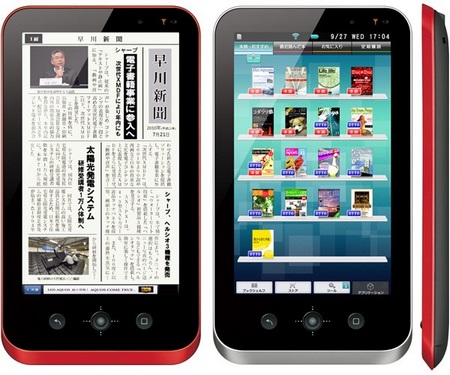
Sharp Galapagos 10.8 : Specs | Price | Reviews | TestAt the end of last year ago, Sharp announced two new advanced eBook Readers from the Galapagos series. The two models launched are a 5.5 and a 10.8 inch screen models. The smaller one is codenamed “mobile type” while the bigger version is the “home type” reader tablet. For now, we present you more detail on Sharp Galapagos 10.8 specs, price and review or "home type" tablet only.

Enjoy our HOME MADE related post :

  1. 15 Challenger Tablets of iPad 2
  2. Gorgeous and Amazing iPad Decals 2011
  3. Top Ten iPad Dock 2011 Must Have
  4. iPad 2 VS Other Tablet : Head to Head Comparison
  5. Apple iPad 2 Smart Covers 2011 Must Have
  6. Most Wanted iPad 2 : What to Expect
  7. Most Wanted Best Cheapest Tablet 2011 You Should Know
  8. Top Best Tablet 2011 (iPad Alternative)
  9. or pick tablet pc archive to look more good alternatives.

What’s interesting about those products is the high screen resolution: 1024 x 600 pixels for the 5.5 inch Galapagos and 1366 x 800 pixels for the 10.8 inch Galapagos. This would make for a great eReading experience. Given the fact that both tablet readers have Wi-Fi, we’ll believe Sharp’s statement that websites will display just like on your desktop on the high res LCD screens.

Sharp Galapagos 10.8 : Specs | Price | Reviews | Test

Specs :

Detailed Technical Specifications of Sharp EB-WX1GJ-B Galapagos 10.8 Media Tablet

Brand: Sharp
Manufacturer: Sharp
Hardware-Designer: Sharp
Release:Date: January, 2011

Physical-Attributes

Dimensions
(width x height x depth):
177 x 286 x 14.7 millimetres
7 x 11.3 x 0.6 inches
Bounding_Volume: 744.1 cubecentimetres
Mass: 765 grams (battery included)

Software-Environment

Embedded_Operating;System: Google Android 2.2
Browse devices running this OS
Operating+System+Kernel: Linux 2.6.32

Graphical:subsystem

Display:Type: color ASV TFT display
Display;Color+Depth: 16 bit/pixel (65536 scales)
Display_Diagonal: 10.8 " (274 millimetres)
Display_Resolution: 1366 x 800 (1092800 pixels)
Viewable-Display_Size: 9.31 " x 5.45 " (236.44 x 138.47 millimetres)
Pixel:density:(dot-pitch): 146.7 pixel/inch (0.17309 millimetre/pixel)

Audio-Subsystem

Audio-Channel(s): stereo sound
Microphone(s): mono sound
Loudspeaker(s): mono sound
Audio-Output: 3.5mm plug

Control:Peripherals

Positioning;Device: Multi-touch screen
Primary:Keyboard: Not supported
Directional_Pad: Not supported
Scroll-Wheel: Not supported

Interfaces

Expansion_Interfaces: microSD, microSDHC, TransFlash
Supports High Capacity (SD 2.0/HC) memory cards with capacity of up to 32GB
USB: USB 2.0 client, Hi-Speed (480Mbit/s)
USB Series Mini-B (mini-USB) connector
Bluetooth;(802.15): Supported, Internal antenna
Wireless_LAN/Wi-Fi;(802.11): IEEE 802.11b, IEEE 802.11g, 54 Mbit/s
Internal antenna
Infrared;Gate: Not supported

Multimedia;Broadcast

Analog:Radio: Not supported
Digital_Media:Broadcast: Not supported

Power Supply

Battery-Technology: Lithium-ion battery
Battery+Build: built-in
Battery;Capacity: 7 mAh

Additional_Details

Built-in:accelerometer: Supported
Additional;Features:
  • WebKit browser
  • 8GB microSDHC
Related-Page: http://www.sharp.co.jp/mediatablet/product/mobile/index.html
Datasheet+State: Preliminary specifications
Datasheet_Views: 9458 times
Datasheet:Added: Oct 8, 10 14:44:13

Review and Price:

This phone will run on Android 2.2 and has been incorporated 3D technology, Smartphone boasts a 3.8-inch display providing a resolution of 800 x 480 pixels, Android 2.2, 1GHz Snapdragon GPU, Wi-Fi, Bluetooth, 8 Megapixel CMOS camera with 720p video recording, microSDHC slot for 32GB memory expansion. The 5.5-inch Mobile version (pictured above) has a delightfully dense 1024 x 600 LCD screen, while its 10.8-inch Home sibling offers a very decent 1366 x 800. There's 802.11b/g Wi-Fi on both, while the littler slate is also enriched with a navigational trackball.

Sharp's emphasis here really seems to be on the cloud-based ecosystem it's creating for these "terminal" devices -- 30,000 newspapers, magazines and books have been lined up for its planned December launch and an "automatic scheduled delivery" facility will help you get at them as soon as the latest issue's ready for consumption. Sadly, we should note that this is specifically tailored to suit the Japanese market, which makes an international release seem somewhat unlikely. For a size comparison between the two tablets and the full press release, jump past the break.

Mobile and Home Galapagos models -- a 5.5-inch slate with 1024 x 600 resolution and a 10.8-incher with 1366 x 800 resolution, respectively -- pricing them at ¥39,800 ($474) and ¥54,800 ($653) for the Japanese market. As usual, direct currency translations are inadvisable, but if you must have a price comparison of some sort, the larger Galapagos model (equipped with an 8GB microSDHC storage card) costs ¥4,000 less than Apple's 32GB WiFi-only iPad. Of course, the big differentiator in Sharp's mind will be the e-bookstore and content ecosystem it's working so hard to create for these Galapagos terminals -- the value of which has yet to be determined.

Sharp Galapagos 10.8 : Specs | Price | Reviews | Test

Sharp has introduced two 3D smartphone, whose use does not require the adoption of classical active polarized glasses, contrary to the 3D TV market today. Named respectively Sharp Galapagos 003SH and Sharp Galapagos 005SH, the Japanese smartphone will be equipped with a 1GHz Snapdragon processor, Android 2.2 (commonly known as the Froyo) operating system and 3.8-inch screen (9.65 cm) with a resolution of 800×480 pixels, which allows him a three-dimensional visualization.

The Galapagos 005SH model will propose a full QWERTY keyboard and is equipped with an 8 megapixel camera. The Galapagos 003SH version, however, incorporate an optical sensor capable of recording 720p video and photograph to 9.6 megapixel. The 3D glasses-free technology is not yet available on the market, but more and more manufacturers seem to want to adopt in their device (mostly television), as demonstrated by the number of launches that took place last September at IFA 2010 in Berlin.

Nintendo, for example, is already on course for its portable game console 3DS, scheduled for 2011. Fujifilm, again, has launched digital cameras FinePix Real 3D W1 and W3, which allow not only to take pictures in 3D, but also record video in three dimensions. The 3D content is not yet widespread, both in the market for film and video games, but Capcom the company, which specializes in games, is preparing for the 3D versions of some popular titles: Mega Man, Ghosts ‘n Goblins Gold Knights, and also Resident Evil: Degeneration for Android.

Sharp Galapagos 10.8 : Specs | Price | Reviews | Test

Enjoy our HOME MADE related post :

  1. 15 Challenger Tablets of iPad 2
  2. Gorgeous and Amazing iPad Decals 2011
  3. Top Ten iPad Dock 2011 Must Have
  4. iPad 2 VS Other Tablet : Head to Head Comparison
  5. Apple iPad 2 Smart Covers 2011 Must Have
  6. Most Wanted iPad 2 : What to Expect
  7. Most Wanted Best Cheapest Tablet 2011 You Should Know
  8. Top Best Tablet 2011 (iPad Alternative)
  9. or pick tablet pc archieve to look more good alternatives

Let us know what you think ‘bout this Galapagos on gagdgetmostwanted by comment below..

Continue Reading

Friday, March 11, 2011

BlackBerry Storm : Specs | Price | Reviews | Test

0 comments

BlackBerry Storm : Specs | Price | Reviews | Test BlackBerry Storm : Specs | Price | Reviews | Test. Quick Specs. Service provider: Not specified. That said, the Storm is a well- constructed smartphone. We tested the RIM BlackBerry Storm in San Francisco using Verizon Wireless service, and call quality was quite. Personalize your smartphone, write reviews or share tips and tricks with other BlackBerry users. Specs at a glance. BlackBerry®. Storm2™ 9550. smartphone. The BlackBerry Storm 9530 Smartphone features Visual Voice mail which displays. When we did our full battery drain test, the phone lasted 7 whole hours. BlackBerry Storm 9500 mobile phone review, specifications and price check.

The ultimate catalog for mobile phones, smartphones and PDA news, reviews, Comparing the specs and features list of the BlackBerry Storm2 to the. For more on this, you can check out our BlackBerry Storm review where we. it puts it on par with other new BlackBerry Smartphones like the Tour and. a little clearer/louder from my initial testing on this review unit. View the image gallery BlackBerry Storm 2 - Smartphones & PDA Phones. Wi-Fi ( 802.11b/g) • microSD • See more specifications. Photo taken with the BlackBerry Storm 2. Best of our tests: this shows how good these.

Related post BlackBerry in Depth Review :

BlackBerry Storm : Specs | Price | Reviews | Test

Design

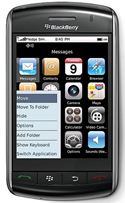
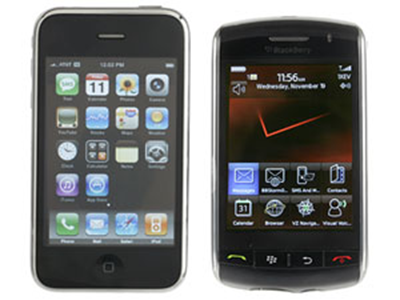
In terms of form factor, the RIM BlackBerry Storm doesn't stray far from the other full touch-screen smartphones on the market today, including the Samsung Omnia and Apple iPhone. Sporting a black casing with silver accents, the handset is a bit blocky and heavy at 4.4 inches tall by 2.4 inches wide by 0.5 inch deep and weighs 5.6 ounces, so it feels a bit wide when you hold it in your hand and it'll make for a tight fit in a pants pocket. That said, the Storm is a well-constructed smartphone. It has a nice, solid feel and the edges have a soft-touch finish to provide a better grip.

BlackBerry Storm : Specs | Price | Reviews | Test

While the Storm's design might not be the most inspiring, the smartphone's display is another story. Obviously, the fact that the Storm is the first touch-screen BlackBerry is news enough, but its 3.25-inch VGA glass display also demands attention for its sharpness and brightness, showing 65,000 colors at a crisp 480x360-pixel resolution. We weren't as impressed with the Storm's screen as the BlackBerry Bold, but it's still beautiful. You can also adjust the backlighting, font size, and type. The Storm is also equipped with an accelerometer, so the screen orientation will switch from portrait to landscape mode when you rotate the phone from a vertical position to a horizontal one, left or right.

Moving onto the touch-screen capabilities, the BlackBerry Storm uses SurePress, so that when you select an application or enter text, you actually push the screen down like you would any other tactile button. You can see a bit of a gap at the top and bottom of the screen, which but makes the phone. In terms of text extry, the BlackBerry Storm features a soft keyboard in both portrait and landscape mode. Originally, only a SureType keyboard was a available in portrait mode, but with the latest upgrade, you also have the option of a full QWERTY keyboard. It's not automatic though and you must enable it by pressing the BlackBerry menu key and then selecting Enable Full Keyboard. When using the keyboard or selecting applications, you do a simple finger touch over the item until it's highlighted and then you press down on the screen to register the action.

BlackBerry Storm : Specs | Price | Reviews | Test

In addition to the SurePress technology, you can also use a number of finger taps or swipes to perform certain actions. For example, you can tap on the screen twice to zoom in on a Web page or map, or do quick finger swipes to scroll though a page. Also, to copy/paste text, you just touch the screen at the start of the text and then with a second finger, touch the end of the block of text you want to copy. You can adjust the tap interval, hover point, and swipe sensitivity in the Options > Screen/Keyboard menu.

While the SurePress technology is cool, it definitely takes some acclimation. It's not a natural feeling to physically push down on the screen, and we often found ourselves forgetting to actually press down; instead just tapping or double tapping on the letter button or link. You do get used to it after a while though, but as far as e-mail creation or text messages, we missed having a tactile keyboard. We couldn't comfortably type long messages as fast as we wanted and when we tried, the message was riddled with errors. The keyboard buttons are just a bit too small and cramped. If I had problems with my small hands, I can only imagine it would be worse for users with larger thumbs.

BlackBerry Storm : Specs | Price | Reviews | Test

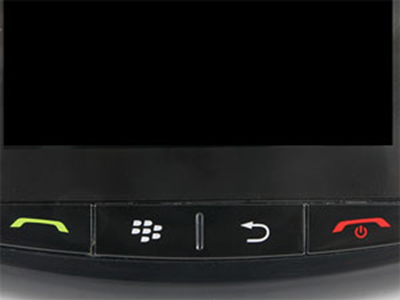
Below the display, you do get a set of tactile navigation controls that consists of Talk and End/Power buttons, a Menu key, and a clear button. Unlike other BlackBerry models, there is no trackball navigator and we have to admit that we missed it. It may be that we're just used to having the trackball, and often we found our thumb automatically looking for the control while trying to scroll through pages and menus. However, even beyond that, we think it wouldn't hurt to have a trackball navigator since it allows for easier one-handed operation. Also, you wouldn't always have to rely on the touch screen and it would be useful for certain operations like for selecting links on a Web page.

On the left side, there's a user-programmable shortcut key and a micro USB port, while the right spine has a 3.5mm headphone jack, a volume rocker, and another customizable button, which is set as the camera activation/capture key by default. The camera lens and flash are located on the backside, and behind the battery cover, you'll find the microSD/SDHC card holder and SIM card slot. Finally, though not readily apparent, there is a device lock and mute button on the top edge of the Storm.

BlackBerry Storm : Specs | Price | Reviews | Test

Verizon Wireless packages the RIM BlackBerry Storm with healthy set of accessories, including a travel charger with various adapters, a USB cable, an 8GB microSD card, a SIM card, a wired headset, a software CD, and reference material. For more add-ons, please check our cell phone accessories, ringtones, and help page.

Features

While the RIM BlackBerry Storm might be the first touch screen for Research in Motion, the company wanted to make sure the smartphone offered the same feel and functionality of previous and current BlackBerrys. The Storm runs the latest BlackBerry OS 4.7, bringing an updated user interface much like the BlackBerry Bold and the BlackBerry Pearl Flip. You now get DataViz Documents To Go Standard Edition, so you can now edit Word, Excel, and PowerPoint files as well. If you want the capability to create new documents, you will have to upgrade to the Premium Edition. We had no problems opening and working on Word and Excel documents, but we can't imagine doing more than minor edits on the Bold or any other smartphone for that matter. Other PIM applications include a Calendar, a task list, a memo pad, a voice recorder, a calculator, a password keeper, and more.

You can also get more applications for your Storm through the recently launched BlackBerry App World. The store was not available when the Storm was first released, but you can download it through the phone's mobile browser. We installed it on our review unit with no problem and were able to download apps such as Pandora quickly and easily over Verizon's 3G network.

For e-mail, the Storm can sync with your company's BlackBerry Enterprise server, with support for Microsoft Exchange, IBM Lotus Domino, or Novell GroupWise, to deliver corporate e-mail in real time. You can also access up to 10 personal/business POP3 or IMAP4 e-mail accounts via the BlackBerry Internet Service. Like all recent BlackBerry models, the Storm has a spell-check feature that will look for errors in e-mails and memos, but not text messages. There's also an attachment viewer for opening Microsoft Word, Excel, PowerPoint, Corel WordPerfect, PDF, JPEG, GIF, and more.

As a phone, the BlackBerry Storm offers dual-mode functionality, so the phone switches automatically between CDMA and GSM networks to offer seamless international roaming--all while keeping the same phone number. (Note that the phone does not support domestic GSM bands.) In all, you get voice coverage in 157 countries (22 of those on CDMA) and e-mail coverage in 62 countries. Just be aware that you'll still incur roaming rates, which range from $0.69 to $2.49 a minute. Verizon also offers technical support if you need help while overseas. First, there's a 24-hour Global Help Desk that's open seven days a week. In addition, you get a calling card for free support calls while traveling outside of the United States from any landline phone to technical support your BlackBerry Storm is lost, broken, or stolen.

The address book is only limited by the available memory with room in each entry multiple phone numbers, e-mail addresses, work and home address, job title, and more. For caller ID purposes, you can assign a photo, group category, or one of 32 polyphonic ringtones. Other voice features include a speakerphone, voice-activated dialing, smart dialing, conference calling, speed dial, and text and multimedia messaging. You can also download Visual Voice mail. Bluetooth 2.0 is onboard with support for a mono and stereo Bluetooth headsets, serial port profile, phone book access, and dial-up networking. To use the Storm as a wireless modem for your laptop, you will need a subscription to one of Verizon's BroadbandAccess plans, which start at $15 per month.

The BlackBerry Storm runs on Verizon's EV-DO Rev. A network, which allows for faster Web browsing, e-mail, and downloads. The Rev. A offers an extra boost over regular EV-DO, bringing download speeds up to the 450Kbps-to-800Kbps range versus 400Kbps-to-700Kbps, while upload speeds will average around 300Kpbs to 400Kpbs (compared with EV-DO's 50Kpbs to 70Kbps). Of course, this is all dependent if you live in a coverage area (you can find a coverage map from Verizon's Web site. The smartphone also offers support for the 2,100MHz UMTS/HSDPA, so you can get 3G support while overseas. Unfortunately, there's no integrated Wi-Fi, which we find disappointing. We realize and understand the argument that the 3G radios does away with the need for Wi-Fi, but we still like having that option, especially if you drop out of range or don't live in a coverage area.

The BlackBerry Storm has a full HTML Web browser that you can view in Internet Explorer or Firefox mode, depending on your preference. You can check out sites in page view or column view, and navigate via pan mode or cursor mode. In pan mode, you can move around pages simply by dragging your finger and then double-tapping the screen to zoom in. To select a hyperlink, you just highlight the link and then click. Meanwhile, in cursor mode, you can just place the cursor over the link and click or use the onscreen magnifying glass to zoom in. There's also a collapsible toolbar along the bottom that lets you go to new sites, change views, and more. There is support for streaming media, including YouTube's mobile site. As we've said before, the BlackBerry browser has greatly improved over the years, but it's still not as easy to use as the iPhone and its multitouch screen.

Last but not least of the wireless radios is integrated GPS. You can use the BlackBerry Storm as a handheld navigator, but to get real-time turn-by-turn directions, traffic data, and more , you will need to subscribe to Verizon's VZ Navigator location-based service, which costs $9.99 per month or $2.99 per day.

BlackBerry Storm : Specs | Price | Reviews | Test

Moving onto multimedia features, the BlackBerry Storm is equipped with a 3.2-megapixel camera with video recording capabilities, as well a flash, auto focus, 2x zoom, and image stabilization. In camera mode, you get a choice of three picture sizes and three picture qualities. There are white balance settings, and you can add various effects to your photos, such as black and white, and sepia. With the built-in GPS, you can also geotag photos. As usual, options are more limited in camcorder mode as you only get a choice of two video formats (normal and MMS) and three color effects. The volume rocker can be used to zoom in and out in both camera and video mode.

BlackBerry Storm : Specs | Price | Reviews | Test

Picture quality was subpar. While we could identify objects in the picture, they looked a bit soft and the colors were completely washed out. Video quality, on the other hand, was pretty impressive with good light and better image quality than other smartphones we've tested.

The Storm's built-in media player can play various music and video formats, including MP3, WMA, AAC, AAC+, eAAC+, AMR-NB, and MIDI music files, and MPEG4, WMV, DivX4, XviD (partial support), and H.263 video clips. There's a search function, playlist creation, shuffle and repeat, and you get a full-screen mode for video playback. The included software CD also contains a copy of Roxio Easy Media Creator, so you can create MP3s from CDs and add audio tags. Like the latest BlackBerrys, the Storm also works with the BlackBerry Media Sync application so you can load your iTunes library. There's 1GB of onboard memory and 128MB of flash memory onboard, while the microSD/SDHC expansion slot can accept up to 16GB cards. Unfortunately, for now, it looks like the BlackBerry Storm will not support Verizon's V Cast music and video services.

Performance

We tested the RIM BlackBerry Storm in San Francisco using Verizon Wireless service, and call quality was quite good. We enjoyed clear audio with no noticeable background noise or voice distortion, and we didn't experience any dropped calls during our test period. There were also no problems using an airline's voice automated response system. On the other end, our friends reported similarly positive results and said they had no problems hearing us. Unfortunately, the speakerphone didn't fare as well. Both sides experienced choppy call quality as words occasionally were cut off. There was also some slight voice distortion on our end. Overall, we were able to carry on full conversations and volume was not a problem, but we definitely had to ask our callers to repeat themselves on more than one occasion. Finally, we successfully paired the Storm with the Logitech Mobile Traveller Bluetooth headset and the Motorola S9 Bluetooth Active Headphones.

Verizon's first firmware update, version 4.7.0.113, definitely improved performance, but there were still multiple issues. We downloaded the software upgrade using the desktop manager, and the entire process went smoothly with no problems. The biggest improvement we noticed was the improvement in the accelerometer. The Storm was much faster to change the screen orientation when we rotated the phone. However, page redraws are still on the slow side and there's continued bugginess. For example, while checking out a Web page, we turned the phone to check it out in landscape mode and the screen went on the fritz for a couple of seconds and went completely blank, though eventually the site came back up. Also, when we were listening to music, we changed orientation and the player controls started to flicker. Launching and using multimedia applications like the camera and multimedia player were definitely better, however, with faster response times and the problems with the inconsistent camera toolbar looks to be resolved.

Now, with BlackBerry OS version 4.7.0.148, the smartphone is even more polished. The browser and camera didn't freak out when we rotated the phone, and in a two-week period, we didn't have any system freezes or crashes. There are also some nice additions, such as a phone icon on the home screen and better test selection for copy/paste--it's the simple things. Since we haven't been using the Storm over a long period of time, we didn't experience first-hand some of the problems and bugs that plagued its owners. However, some of features of 4.7.0.148 include a fix for the phone freezing during incoming calls or a blank screen appearing while on a call and improved camera functionality.

Music playback through the phone's speakers sounded blown out, though there was plenty of volume. Thankfully, the built-in 3.5mm headphone jack so should allow you to enjoy better sound quality. Video performance wasn't quite as dazzling as the BlackBerry Bold's. There was a bit more pixilation, but we still enjoyed smooth playback. Web browsing was pleasantly swift thanks to Verizon's EV-DO Rev. A network. It took about 25 seconds to 30 seconds for graphics-intensive sites such as CNET to fully load, while the mobile sites for CNN and ESPN loaded in about 10 seconds.

The Storm's GPS capabilities were great. It took the smartphone only about 2 minutes to get a fix on our location, and we used VZ Navigator to plot a course from the Marina District of San Francisco to CNET's downtown headquarters. Route creation was quick and it was able to get us back on course in a timely matter after we purposely missed several turns. That said, the voice-guided directions sounded blown out at the medium-high level and too soft at the medium level, so that was a bit of a struggle.

The BlackBerry Storm comes with a 1,400mAh lithium ion battery with a rated talk time of 5.5 hours and up to 15 days of standby time. In our battery drain tests, the Storm offered 7 hours of continuous talk time on a single charge. The battery performance in day-to-day usage was better. Before the firmware update, the battery would already be at 50 percent after just a couple hours of using the phone, Web, and multimedia applications, but after the update, it would only be drained about 25 percent. One thing we noticed, however, after a period of use the phone gets a bit warm where the battery is located on the back.

Display

Though the BlackBerry Storm and BlackBerry Storm2's displays have the same specifications listed on their spec sheets, to my eyes the BlackBerry Storm2's display seems to be improved. Putting the BlackBerry Storm beside a BlackBerry Storm, you can see that when powered off the Storm2's display is much darker. Still side by side but now powered on watching the same music videos, the Storm2's display is brighter, with darker blacks and whiter whites. It really is impressive. The only improvement I'm longing for here is to reduce the amount of black border surrounding the edge of the display which would create a noticeable jump in screen real estate.

While there has been plenty of debate in the forums about whether or not the BlackBerry Storm will support OpenGL (3D graphics support), to date there has been no official mention of it yet. At last year's BlackBerry Developer Conference, this was one of the most sought after features developers wanted to see in the BlackBerry platform. With the 2nd Annual BlackBerry Developer Conference just around the corner, I can't help but think maybe there is more to the Storm than meets the eye in this department, and that RIM will announce upcoming OpenGL support at the event and at a later date will be able to flick the OpenGL switch on the Storm. I know I'd be pretty stoked to find later that the Storm2 has the support built-in. I guess time will tell...

Sound

While on the topic of watching music videos, it makes sense to comment on the Storm2's speakers, which sound solid. The original BlackBerry Storm can get pretty loud, but it really tends to distort/get tinny as you crank the tunes up on the external speaker. The Storm gets loud, but has less distortion at the louder volumes. The sound coming out of the speakerphone on calls also seems to be a little clearer/louder from my initial testing on this review unit.

Now with WiFi

BlackBerry Storm : Specs | Price | Reviews | Test

The BlackBerry Storm didn't have WiFi. The BlackBerry Storm2 does. It's as simple as that. AMEN. Leading up to the release of the BlackBerry Storm 9530/9500, we had heard of units floating around that actually had WiFi onboard. So whether it was a carrier mandate to not put WiFi on the original BlackBerry Storm or a technical limitation at the time, it is clearly apparent now that the carriers want it and that RIM can deliver it.

More Memory

The BlackBerry Storm doubles, across the board, the amount of memory on the device compared to the BlackBerry Storm:

Application (Flash) Memory has doubled from 128MB to 256MB. This is the active memory where the firmware resides, applications are installed and use resources, messages sit, browser cache piles up, etc. Devices like the BlackBerry Storm and Bold with only 128MB of flash memory tend to bog down as there's simply not enough memory. While 256MB is still not a big number and hardcore BlackBerry users would like to see that number increase 4 fold or more, it puts it on par with other new BlackBerry Smartphones like the Tour and Curve 8900 and so far during my time using the device the 256MB appears to allow the Storm to run smoothly.

Device Memory has doubled from 1GB to 2GB. This built-in memory is used for storage - pictures, videos, downloads, apps installed from App world (get backed up here, but when installed utilizes application memory).

Expandable Memory that ships with the device has also doubled. Whereas the BlackBerry Storm shipped with an 8GB MicroSD card, the BlackBerry Storm2 ships with a 16GB card, which can be removed.

Web Browser

BlackBerry Storm : Specs | Price | Reviews | Test

It's getting better, but a few speed tests later show it's still not where it needs to be in terms of speed, rendering and ease of use compared to the competitive benchmark, the iPhone's Safari browser. Tabbed browsing hasn't made an appearance yet, nor has multi-touch for zooming in/out (though you would think the hardware/OS should be capable of it based on the fact you can now light up two keyboard keys at a time). Javascript support is now enabled by default, which is a step forward, but it's not yet the leap so many BlackBerry users are waiting for.

Thankfully, if you're not satisfied with the native browser, third party browser support is here and on the way via Bolt Browser, Opera Mini and SkyFire. Likewise, RIM knows their browser is a weak spot and is working to improve it as demonstrated by their recent acquisition of Torch Mobile. It's coming. We have faith in you RIM.

Other Stuff: GPS, WiFi, Phone, Camera, etc.

With not much time between getting my BlackBerry Storm unit and getting this review written up, I haven't had a full chance to grind through every feature and function of the Storm to the extent I would like to. A few phone calls later shows that the Storm should be solid as a phone, and the GPS located me on the map in a matter of seconds. I took a few pictures on the camera as well and they look good, but haven't had the chance yet to pit them head to against photos taken from the Storm or competition. Oh, and the Storm2's vibration function is seriously powerful (though kind of loud). I'll come back and add to this section later as I have a chance to spend more time putting the Storm through its paces.

BlackBerry OS 5.0

BlackBerry Storm : Specs | Price | Reviews | Test

I often take for granted that if you're reading GadgetMostWanted.com you're likely a BlackBerry user and are familiar with the BlackBerry operating system experience. If you're completely new to BlackBerry you'll want to hit our BlackBerry 101 section and Smartphone Round Robin articles to learn the basics about the platform and what it can do for you (everything!). As for Handheld Software version 5.0, we'll have a full walk through of all the improvements coming soon in a future article. The BlackBerry Storm and Bold 9700 will be the first new devices to launch with it, but it will be rolled out to existing devices on the market so we'll want to do an in-depth job covering it for everyone.

A noticeable BIG improvement to OS 5.0 for the BlackBerry Storms is the inclusion of inertial scrolling with snap back. It provides a much more intuitive and friendly user experience. Other good news on the BlackBerry Storm is that it features the new and improved threaded SMS chat client (w00t!). Combine this with the recently released BlackBerry Messenger 5.0 and the native IM clients are at a whole new level of addictiveness.

BlackBerry Storm Apps

The BlackBerry Storm2 comes preloaded with BlackBerry App World. The review unit I received also comes with the Application Center pre-loaded, which seems a bit redundant since App Center contains App World and all the other apps (IM clients, Facebook, Flickr) can be found in App World itself. If and when you take delivery of your BlackBerry Storm, you'll also want to check out our GadgetMostWanted App Store. There are a lot of compelling reasons to load up GadgetMostWanted App Store Client on your phone (themes, better pricing in many cases, sales and promotions, etc.). Check out this article for Getting Apps on your BlackBerry which goes through the process. As the Storm hits the market we'll be sure to put out a Top Apps for your BlackBerry Storm article.

BlackBerry Storm : Specs | Price | Reviews | Test

BlackBerry Storm Accessories

If you're a BlackBerry Storm owner planning on purchasing the BlackBerry Storm, you'll need to do your due diligence on which accessories will still work and which won't (visit this page on BlackBerry Storm Accessory key points). You shouldn't have much of an issue with loose fitting accessories, like BlackBerry Storm2 cases (top pouches and leather holsters should be fine, skins should be close) and BlackBerry Storm batteries (1400mah, like the Storm, 8900 and Tour), but the differences between the Storm form factor and original Storm are big enough that accessories like the always popular BlackBerry Charging Pod may not quite work. To see compatible Storm2 accessories, you'll want to keep it locked to our BlackBerry Storm Accessories page at ShopGadgetMostWanted.com. And as we did for apps, we'll also put together a Top Accessories for the BlackBerry Storm article once the device hits the market.

BlackBerry Storm Price

The best price of Blackberry Storm 9530 in India is Rs. 11990. The price has been sourced from 9 online stores in India as on 11th March 2011. Click here [via eBay]

Continue Reading


Copyright 2010 All Rights Reserved | Super Template by Ilmu Komputer | Modified by Ilmu Grafis | Original Wordpress theme by Ahli Desain