Nokia N9 : Specs | Price | Reviews | Test. The mobile phone market is spreading fresh rumors about the latest N Series handset from Nokia, which is theN9. This might come as a surprise too many people as the Nokia N8 was probably the culmination of the Symbian™ based N Series handset from the Finnish company. However, there is no official announcement yet made by the company, but there are some leaked pictures of N9 making there way round several websites.
Nokia N9 smartphone. Announced Not officially announced yet. Features 3G, TFT capacitive touchscreen, 5 MP camera, Wi-Fi, GPS, Bluetooth. Nokia N9 QWERTY Smartphone Review | Specifications. Nokia announced their latest smartphone namely Nokia N9 runs Meego Operating System, We've seen the hardware photos for the mysterious Nokia N9 leaked before, and the N9 is said to be sporting high-end smartphone specs. The Nokia N9 has been leaked and we have the first specs and features for this upcoming Nokia smartphone.
We have also seen the leaked snaps and a got some information about the handset and based on that, we are featuring a preview of the mobile phone. The pictures reveal that Nokia N9 has great resemblance to its predecessor, the N8 Symbian™ device. The keyboard of the handset comes off as a slider just like the N8.
The device will come with dual SIM functionality, which means the users can use the service of two network providers at one time. Entertainment options seem to be great as the N9 will integrate TV-out (720p video) via HDMI, 8 mega pixel camera with Carl Zeiss optics, music player, video playback, stereo FM with RDS and a lot more. In addition to that, the handset will integrate Ovi Maps 3.0, A-GPS support.
At the moment there are quite a lot of speculations going around the market about this rumored N Series mobile phone. However, Nokia is yet to make the official announcement of the device and the release date is not yet known. It is expected that the mobile phone will appear in the European market in the first quarter of 2011.
Here, we are featuring a preview of the Nokia N9 based on the unofficial specifications.
nokia n9 specification
8 Mega-pixel camera with Autofocus, Dual LED Flash, Face Detection, Smile Detection & Geo Tagging
Video Recorder with 720p, 25fps with Video Light
video Player supports H263, H264, WMV, MP4, XviD & DivX Formats
Video & Photo Editor
Additional VGA Camera For Video Calls
Changable Colour Themes & Customise Home Screen
4 inch Super AMOLED Capacitive Touch Screen display with 16 million colours & 640 x 360 Pixels
Music Player Supports WMA, WAV eAAC+ & MP3 formats
Album Art Display & Nokia Music Manager
Built-in RDS FM Radio with FM Transmitter
MP3 & WAV Ringtones
Vibration Alert
3.5mm Audio Jack
SMS, MMS & Instant Messaging
Email & Push Emai
Predictive Text Messaging
Java™™ Games & Downloadable Games
Personal organiser with Phonebook, Contact Widget, calendar, Clock, Alarm Clock, Converter & Calculator
The Nokia N9 has a very stylish metallic design with a horizontal slider form factor. It has a superb keyboard with widely spaced out keys and a huge 4.0 inch TFT capacitive touchscreen display with a resolution of 480 x 800 pixels. The phone is a work of art and the build quality seems to be really good.
Hardware and OS
The Nokia N9 will run the new MeeGo OS. It might be the first phone to run MeeGo. It is quite capable when it comes to hardware, and sports some of the best hardware components. It is powered by a 1 GHz Qualcomm Snapdragon processor and comes with 512 MB RAM. It has 64 GB internal storage and supports microSD cards up to 32 GB.
Nokia N9 – network and connectivity
Good network and connectivity support is essential for any mobile phone handset. If a phone is rich with top class features and cannot establish communication properly, then all the other features seem to appear pale. Particularly in the case of the smart phones, efficient network and connectivity support is a must. According to the leaked information, N9 by Nokia is a dual SIM handset. This implies the users can enjoy the network services of two operators in a single phone.
The handset provides support to both 2G and 3G networks. The users of the 2G network will be supported by quad band GSM 850/ 900/ 1800/ 1900. The users of the 3G network will get the support of HSDPA 850 / 900 / 1700 / 2100 /1900. With the probable inclusion of Wi-Fi® 802.11 b/g/n, UPnP technology and HSDPA, the users can enjoy high speed browsing experience. The browser support of the mobile phone includes WAP 2.0/xHTML, HTML, and RSS feeds. Data transferring facilities can be conducted by using the microUSB v2.0 and Bluetooth® v3.0 with A2DP. The users will also get USB On-the-go support. It is certain that Nokia has included some excellent features to support the network and connectivity requirements of the users.
Nokia N9 Review – the camera
This Symbian™ powered smart phone has several rich functions and applications, but the camera feature is one of the biggest highlights. The N-Series mobile phones by Nokia have always been good on the camera features and this time the expectation from the users is sky high. According to the leaked reports, the camera of the Nokia N9 is going to be a top class 8 mega pixels. If the high mega pixel factor seems to be good news, then there is more. The camera of the handset will load some tremendous features such as Carl Zeiss optics, face and smile detection, dual LED flash, auto focus, and a mind blowing resolution of 3264 x 2448 pixels. The camera is also capable of shooting videos at 720p @ 25fps. Other video photography features include LED video light for taking clear video shots even in low light conditions. The N9 also includes a secondary VGA camera for video calling.
Nokia N9 – the display
If you thought that the 8 mega pixel camera factor was the best thing that N9 has to offer, then take a look at the probable features of the handset’s display. The display features leaked out on the Internet are awesome. The huge 4.0 inches touch screen display is Super AMOLED Capacitive, which itself speaks volumes about the quality. It features a resolution of 360 x 640 pixels and 16 million colours. Some of the major highlights of the display includes touch sensitive controls, scratch resistant surface, multi-touch input method, accelerometer sensor for UI auto rotate, proximity sensor for auto turn off, and QWERTY keyboard. The slide-out QWERTY keyboard has four rows and it seems to be comfortable for providing a smooth and fast typing experience.
Nokia N9 Review – the memory
Every mobile phone must be backed with appropriate memory support, especially in the smartphones. The Nokia N9 is loaded with a wide range of features and applications such as Flash Lite v4.0, video and photo editor, document viewer (for viewing PowerPoint, PDF, Excel and Word files), Digital Compass, music files, video files, image files, and lot more. To accommodate all these features and maintaining their smooth running, good storage capacity is very essential. Therefore the N9 comes with an option of expandable memory up to 32 GB by using the microSD™ card slot. The users can use memory card according to their preferred capacity.
Nokia N9 – music and videos
The users of the Nokia N9 will get to enjoy good quality music with MP3/ WMA/ WAV/ eAAC+ player. There is also a DivX/ XviD/ MP4/ H.264/ H.263/ WMV player for playing diverse video files. They can enjoy watching videos by connecting the handset with home theater system by using TV-out (720p video) via HDMI and composite. Dolby Digital Plus via HDMI is also provided ensuring excellent quality of entertainment.
If Nokia announces the N9 it will be great as it will serve a welcome break against the series of serious phones like nokia-e73 that the manufacturer is releasing.
Nokia N9 Conclusion
Nokia has always been building the most usable and affordable phones through out its entire history. They have successfully launched dozens of phones, which helped shaped the industry into more matured playground. Nokia N9 is certainly going to be one of those top notch ones, which deserve all kind of appreciation, however, N9 is not the only high end smartphone releasing this year, 2011 is full of anticipation and surprises as there are a lot of powerful gadgets being announced at MWC 2011.
Since the phone has not yet hit the market, we cannot put a figure on price, however check Mobile Prices in Pakistan for the right price when ever N9 is released. Feel free to contribute your experience with Nokia mobiles and let us know of what you think of this meego mobile phone and whether it shall help shape the new trends in the competitive mobile market?
Nokia N9 Price
Nokia N9 is expected to launch in mid 2011.Price of Nokia N9 in India will be Rs 30,000
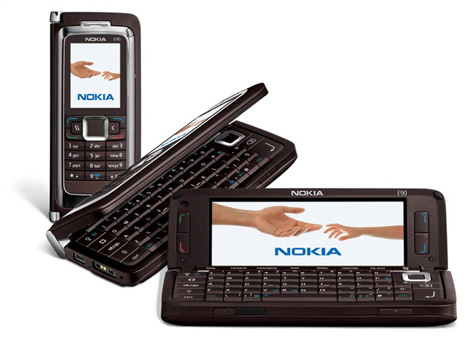
Nokia E90 Communicator : Specs | Price | Reviews | Test. Think of the Nokia Communicator E90 not as just another "boring" business tool, but as the keyboarded version of the incredibly full-featured and hot Nokia N95. Yes, this is clearly the newest member of the 10 year long Communicator line, but this ain't your grandma's Communicator. While we loved the Nokia 9300, Nokia's last Communicator, it lacked all the bells and whistles of a high end NSeries device: things both fun and practical weren't there.
No camera (we can understand since some companies restrict phone use, but we missed it nonetheless), no WiFi, just OK multimedia features, and by the time it hit the US, an older version of the Symbian OS. In contrast, the E90 has it all: a 3 megapixel camera with autofocus lens and VGA video recording, full GPS, WiFi, Bluetooth 2.0, good multimedia and the latest versions of the Symbian OS (9.2) and Series 60 3rd edition Feature Pack 1.
That's another big change: Nokia Communicators have always run Series 80, now put to rest since Series 60 has become powerful enough to handle the Communicator line's features. From a US perspective, the phone is more practical being quad band EDGE rather than 2 triband versions (no having to do research to make sure you get the one that works on all US bands). The E90 gets HSDPA, but sadly for those of us in the US, it supports only the 2100MHz band used in Europe, so we only have EDGE to work with in the US.
The phone is available in two colors: mocha and red, and it can sync to both Windows and Mac OS X computers. It's available unlocked from importers but not carriers in the US. Our review unit came from the very reputable Dynamism, who includes their own 1 year rescue warranty and unlimited toll free tech support.
The good: The Nokia E90 Communicator is equipped with Bluetooth, Wi-Fi, and GPS, and has a solid set of productivity and communication features for the business user. The Symbian smartphone also has a full QWERTY keyboard and 3.2-megapixel camera.
The bad: The Nokia E90 doesn't support U.S. 3G networks, and speakerphone volume is a bit weak. The handset is also heavy and bulky.
The bottom line: The Nokia E90 Communicator has a feature set as large as its size, satisfying the needs of the power business users. That said, we're disappointed by the lack of 3G.
Nokia E90 Communicator features at a glance:
Dimensions: 132 x 57 x 20 mm
Weight: 210 g
Talk time: up to 5 hours
Standby time: up to 15 Days
Full QWERTY keyboard with inner/outer 16 Million color displays
Display: 800 x 352 pixels with 16 million true colors
Camera: 3.2 megapixel camera with flash and autofocus QCIF camera for video calling
128 MB built-in memory, support for additional microSD expanion of up to 2Gb
Support for push email with filtering, including Nokia Intellisync Wireless Email
Integrated GPS for Sat Nav
Symbian S60 platform, Nokia Office Tools 1.1 and Flash Lite 2.0 supported
WiFi, HSDPA up to 3.6Mbit/s enabled
WCDMA 2100 MHz with simultaneous voice and packet data
GPRS/EGPRS (Class A, MSC 32) and 3GPP
Bluetooth and Infrared connectivity
GSM quad-band (850/900/1800/1900), WCDMA 2100
Design
When there's no need for the QWERTY keyboard, we can rely on the numeric keypad and a 2-inch QVGA screen on the top face. That, however, comes at a price. The E90 isn't the smallest or the lightest smart phone, but we feel its size and weight can be justified by those who want a portable computing device. Unlike the Dopod U1000 which is also in the mini computer category, we could still fit the E90 snugly into a pants pocket.
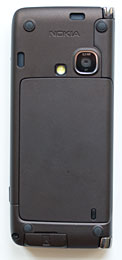
The build quality is also excellent for this Nokia. However, the faceplate at the back of the E90 didn't gel very well at the top where the speakers are, but we're nitpicking and it could be just our review unit. When we're using the directional pad, delete and enter buttons on the QWERTY, we can feel its hollowness.
On the outside, the E90 is like any other candy-bar phone. In fact, most of the functions are accessible from the 2-inch screen save for a front-facing camera for 3G video calls. The beauty of the E90 shows up only when we open the clamshell and let it sit on the table like a mini laptop.
Accompanying a generous 4-inch 800 x 352-pixel LCD are numerous shortcut buttons for commonly used applications and also two customizable My Own keys for user-specific programs. A QCIF camera sits at the top left corner of this screen for video calls. The QWERTY keyboard is a joy to use although it is still impossible to type with two hands like on a full-size keyboard. Most times we simply used our thumbs or two index fingers to type. Unlike the E61i and the Dopod C730, the QWERTY on the E90 is considerably wider so our digits have to move across a longer horizontal distance. That could be tiring after a while.
That said, the keys provide tactile feedback with a pitch of about 0.5mm (which may be enough for some, but not others). It would have been perfect if there was a more distinct feel between each button. A flaw with the earlier 9300i was that the keyboard didn't light up. Fortunately, this is corrected on the E90 with a dedicated button to adjust the brightness of the screen and also to light up the QWERTY keyboard. The keyboard lights up with a brightness level that's enough for us to know where each key is, yet isn't too glaring to distract us from the screen.
Horsepower and Performance
Low memory (RAM for running programs) has been a sore point for S60 smartphones since time immemorial. The E90 marks a wonderful step forward: instead of the 20 megs average, it has 80 megs free to run programs! In terms of Symbian applications, this means you can run many applications at once with no need to exit apps when memory gets low. Even RAM-hungry apps like Gallery, the web browser and Maps can all run together happily. This makes the E90 Communicator a serious business tool that can make the most of multi-tasking. We hope this is the beginning of a trend for Nokia, but we fear it might just be a bump for the Communicator line.
The Communicator runs on a dual core ARM11 family CPU at 332MHz and performance is very good by S60 standards. The E90 has dedicated 3D hardware acceleration which is an interesting inclusion for a business oriented phone. Likely it will be well-suited to run 2nd generation NGage platform games when they arrive. Video playback is quite good, with the phone handling 500kbps MPEG4 files with minimal frame dropping. The Nokia has 256 megs of NAND flash memory, with approximately 128 megs available for your use. Should you need more storage for music, videos or anything else, there's a hot swappable microSD card slot on the phone's left edge under a door. It supports the SDHC standard for cards over 2 gigs capacity.
Phone Features, Reception and Data
This is the first Communicator with 3G, and HSDPA at that. Sadly for us Americans, that high speed data connection is available only on the 2100Mhz band, which isn't used in the US. That means we have to resort to 2.5G EDGE, which averages 165k on the E90 according to DSL Reports mobile speed test. You can turn off 3G in phone settings to save power as a consolation. Thankfully, there's WiFi for much faster data when near a hotspot or home/work access point. The E90 is a quad band GSM world phone that supports all GSM bands: 850/900/1800/1900MHz and it's sold unlocked for use with any GSM carrier by Dynamism and other importers. The SIM card is located under the battery. Though import versions of the E90 aren't targeted to the US, the Nokia Settings Wizard had no trouble setting up AT&T and T-Mobile settings for data and MMS for us. Call quality was the usual excellent Nokia stuff, and reception is strong (stronger than the Nokia 9300) on both the 850 and 1900MHz bands as measured using PhoneNetInfo and other decibel-reading utilities. The E90 comes with the usual speed dial where you can assign 2 through 9 to numbers in your contacts (1 is reserved for voicemail). Also there is Nokia's voice dialing which we've never found very trustworthy (woe when it dials an overseas contact instead of the intended next door neighbor). Voice dialing gives you only 1.5 seconds to make sure it "heard" and dialed the correct number.
We've extolled the many virtues of the S60 3rd edition web browser in several other reviews. Suffice to say it and the iPhone have the best browser in the mobile business, hands down. Pages are generally rendered faithfully, including javascript and most dHTML based on javascript, CSS, tables, frames and more. The S60 browser uses Safari technology, and it also handles WAP sites and RSS feeds. In conjunction with the 800 pixel wide screen display, it's a most desktop-like experience. Sorry, there's no QuickTime or Windows Media player but it does support Flash Lite, Real Media and multiple windows along with SSL.
The Messaging application supports POP3 and IMAP email as well as SMS and MMS messages. If you leave the Messaging application running, it will automatically check for new mail and notify you (it retrieves headers only until you tell it to download the full message). It renders HTML emails quite well for POP3 and IMAP accounts. If you want BlackBerry Connect push email, you can download it from Nokia's Business software site here (it's free).
Software
The Communicator runs Symbian OS 9.2 with Nokia S60 3rd Edition Feature Pack 1. As mentioned, this is the first communicator to run S60, and overall the adaptation works well with good use of the added screen real estate. For example, Contacts has its listing on the left with the contact detail on the right. The calendar's default view shows the current month on the left, with appointments for the highlighted day shown on the right. Gallery has a scrollable list of media on the left and shows a preview size image on the right.
The Communicator has both traditional notes that sync to Outlook and Active Notes which supports embedding images, business cards, sound and video clips. To-do items (tasks) are tracked in the calendar and all PIM applicatiions sync to Outlook under Windows and to the Mac OS X address book and iCal (no notes syncing though). PC Suite for Windows is included on the companion CD and you can download Nokia's iSync plugin for the Mac here. PC Suite allows you to transfer multimedia items including photos, music and videos under Windows and for Mac users there's a downloadable beta of Nokia Multimedia Transfer for syncing with iTunes and iPhoto. Calendar and Contacts are full-featured and up to business use with one continuing complaint: there's still no sort by company option in Contacts, truly odd for a business phone.
For MS Office work there's QuickOffice which handles viewing and editing Word, Excel and PowerPoint files. It does a decent job of preserving formatting, and is as capable as the Mobile Office suite on Windows Mobile Professional (Pocket PC). The wide screen display is extremely well-suited to Excel document and PDF viewing. Adobe Reader handles PDFs, even long files with images and there's an un-zipping application as well along with the S60 File Manager. New is Nokia's Team Suite application, where you can creates teams for group messaging, conference calling and more.
Fun and games include Nokia's Gallery application for viewing photos. There's a music player with playlists and EQ, Real Player that handles MP4 (including non-copy protected iTunes format MP4), MPEG4, 3GP, RA, AAC and RV files. In our tests, Real on the E90 had better than average performance for an S60 device, finally rivaling Windows Mobile Pocket PC devices with faster CPUs. There's also an FM radio that uses the wired headset as its antenna (though you can play radio through the speaker) and Flash Lite (not to be confused with the Flash browser plugin on the desktop). Music quality through the included stereo headset is very good, as it is through Bluetooth stereo headphones.
GPS
The E90 ships with software similar to the Nokia N95, which also has an internal GPS. The Communicator has a true GPS, though it's not a SiRF III which generally offers the best performance in mobile packages. Nokia Maps is a world-wide solution, and that's ambitious. While it's very cool to search for a restaurant called "Pescador" and see results not only nearby, but also in various states of Mexico along with Argentina and other countries; you know there have to be holes in mapping and navigation somewhere in the world. We hear Maps works fairly well in Europe, but in the US, it's a decidedly mixed bag.
Nokia includes a GPS application and Maps which provide mapping and navigation worldwide (turn-by-turn navigation and route simulation require a fee). The GPS application shows you current latitude, longitude, elevation, speed and more. The navigation and mapping are powered by Navteq and TeleAtlas and you can download maps to the phone (or microSD card) over-the-air or via WiFi. In addition you can use desktop map loader software to download and transfer maps to the phone. The on-phone software is actuallysmart2go which Nokia purchased, and it includes maps, an extensive POI database (points of interest), route simulation, directions shown both on map and turn-by-turn and more. It has day and night display modes and options to exclude toll roads, tunnels, highways and ferries. The software and basic service are free, but you must pay a monthly fee of approximately $13, or $110 for 3 years (for the US and Canada) if you want route simulation and turn-by-turn directions including spoken directions. Though maps and POIs are free for those areas of the world covered, you would have to buy navigation on a per country basis. So if you are a US resident but travel to France and want turn-by-turn navigation for France, you'll need to purchase that (which makes the 7 day and one month options attractive).
Like the Nokia N95, the E90 is relatively slow to acquire a GPS fix and there's no assisted GPS feature to speed things up (yet). Our E90 takes between 1 and 2 minutes to get a fix, unless it's been used within the last hour, then it takes only 30 seconds to a minute. Unlike recent SiRF III GPS equipped PDAs and smartphones, the E90 isn't likely to get a signal indoors and can occasionally lose track of satellites for 10 to 30 seconds in a moving car with modest cloud coverage overhead.
We really liked the logical and very complete POI listing, but were surprised that some businesses weren't available in the search function (i.e.: Apple Store-- there are 4 in our immediate area and other mapping/navigation solutions list them). Spoken turn-by-turn directions are delivered in a clear male voice and the route simulation is a must if you want to double-check the route before heading out. Here in the Dallas metroplex, an amazingly orderly street grid is the norm, and buildings are relatively short which should make for good results. But we found that the application was slow to re-route when we chose a different route: it took about 2 minutes for it to stop insisting we make various U-turns rather than re-routing. Granted our map data doesn't download as quickly over EDGE as it would over 3G overseas, but nonetheless, good guidance logic would have started re-routing much sooner. Mapping a route from location A to B with the same options (fastest route, no avoidances) often yielded different routes-- odd. Route selection was sometimes downright peculiar, as we also noted on the N95. For a fastest route selection, it consistently wanted us to make our way through the twisty, low speed roads in our development rather than taking the short hop out to a major road.
There aren't many professional mapping and navigation solutions for the E90 with US maps yet. We tried Wayfinder which doesn't have the built-in solutions rich set of features, and it did a better job of routing but had the same slow acquisition times and lost satellites in-route.
Browse the web
The user can take a call over the phones loud speakers which leaves the user handsfree to continue working & enjoy a voice over IP Internet call on their E90. The user can talk on every continent as the E90 comes with quad band technology which covers GSM 850, 900, 1800 & 1900 which will switch between the network bands automatically. The phone comes with a XHTML Web browser which allows the user to access Web site information when the user is away from their office. The Nokia E90 Communicator comes with short cut keys to voice features which allow the user to gain quick access to their voice features. The phone comes with a push to talk feature which works like a walkie talkie style phone communication.
Camera
The Nokia E90's 3.2 megapixel camera is impressive, both for still photos and video. Video quality rivals the excellent N95 and like the N95 it can shoot at VGA resolution at 30fps. Still image quality isn't quite as good as the 3MP autofocus Nokia N73 (one of the best), nor can it beat the 5MP N95 or Sony Ericsson's top CyberShot phones such as the 800i, but it's better than most camera phones on the market. The autofocus lens is sometimes a little balky to focus but generally it's not too slow by autofocus camera phone standards, and it manages to create good depth in images.
While Nokia used just the right amounts of JPEG sharpening and smoothing in the N73 and too much sharpening in the N95, the E90 overall has just a bit too much sharpening and pleasing smoothing. Color balance is often spot-on, as with the image on the right, but there are times when color shift blue, especially indoors even under incandescent lighting. Overall, contrast is a little too high which can make the photo look slightly dark (see the pool photo below), but we're being picky here. Compared to most camera phones, the photos are fantastic. Unfortunately, indoor shots in poorly lit locations are Nokia's weak point and the E90 is no exception. Even the fairly bright LED flash doesn't help if the subject is more than 4 feet away.
The camera can take still images up to 2048 x 1536 resolution and it has digital zoom. A variety of image settings allow you to tweak photos including color effects, white balance and light sensitivity (handy if you're getting too much white out). The camera and camcorder can save photos and videos directly to a micro SD card and there are self-timer and burst mode (called sequence mode) for images.
The camera can shoot video up to VGA resolution at 30 fps and has features that include image stabilization and recording video with audio. Quality is quite good for both video and audio, as mentioned. The front facing QCIF video conferencing camera is of little use here in the US, since no GSM carrier supports simultaneous 2-way video calling.
WiFi and Bluetooth
As we'd expect of a strong business phone, the Communicator has WiFi 802.11b/g. Range was average by PDA and smartphone standards and connections were reliable. The phone supports open and encrypted networks along with WPA, and has an auto-scan feature that will look for access points within range (you can turn this feature off to avoid endless notifications in urban areas and to save battery power). The Nokia intelligently switches to a saved WiFi access point if available, rather than using GSM/3G data.
The E90 has Bluetooth 2.0 +EDR with pretty much every profile supported. There's handsfree, headset, remote SIM (for car kits), HID (Nokia includes their Bluetooth keyboard driver), serial port, A2DP stereo, DUN and file transfer. We had no problem transferring files to and from our Windows and Mac machines and syncing over Bluetooth to our Mac Pro using Nokia's iSync plugin. We tested the Plantronics Pulsar 590A stereo bluetooth headset and the Plantronics Discovery 655, BlueAnt Z9 and Samsung WEP-200 Bluetooth headsets all of which worked well. Stereo sound through the Pulsar 590A was rich and full by Bluetooth standards, and we managed 25 feet range.
Battery Life
The E90 has surprisingly good battery life for a smartphone with a large display (make that 2 displays), GPS and triple wireless radios. The 1500 mAh Nokia BP-4L easily lasted us 3 days on a charge without serious multimedia use (just watching a few 5 minute short films and listening to MP3s for an hour a day). The WiFi radio uses power judiciously and as such it didn't bring the battery to its knees. We used WiFi about 30 minutes per day and turned off automatic access point discovery (both to save battery life and because we didn't really want to know about the myriad access points always in range wherever we went). Constant GPS use, say for a day on the road, will use up the battery more quickly and we'd suggest a car charger for road warriors. Though the GPS is more power-frugal than on other mobile phones we've tested, in fact impressively so, it won't last 8 hours of continuous use.
Conclusion
A fantastic update to the Communicator line that's more like a re-birth. While keeping the best of the Communicator line's inventive and practical ergonomics, the feature set has been raised to the sky. HSDPA will thrill Europeans and quad band EDGE means the phone will work fine in the US as well as anywhere else in the world GSM service is available. WiFi will keep you connected when near an access point and Nokia's Bluetooth implementation is as usual, excellent. The PIM applications are strong and the Office suite plus Acrobat Reader make for a good mobile office. The web browser is best in its class and the mail application is decent. BlackBerry users will appreciate BlackBerry Connect and the phone's overall stability is excellent. For the first time, we get good multimedia and an excellent camera in a Communicator, which means down times won't be dull.
Pro: Fantastic wide screen display with 800 x 352 resolution that's very viewable outdoors. Very good camera, WiFi, Bluetooth and a GPS. Excellent Communicator design melds a mobile phone with a notebook. The E90 is extremely stable and reliable.
Con: In the US, the GPS and Nokia Maps is a mixed bag. Nokia has improved on the N95's GPS with firmware updates, and we hope they do the same with the E90. Large by phone standards. No US 3G. The mobile office and strong PDA features feel a bit hobbled without a touch screen.
Acer Iconia Tab A-100 7-inch : Specs | Price | Reviews | Test. Boy oh boy, these Taiwanese companies are seriously gunning to take the bottom out of the Honeycomb tablet market. After we saw ASUS stride forward with very competitive pricing on its 10-inch Eee Pad Transformer, we're now being treated to Acer's riposte, an eminently reasonable £300 ($483) price tag attached to its 7-inch Iconia Tab.
Nothing is really skimped on here, you get the dual-core Tegra 2 and Android 3.0 one-two punch of hardware and software that's become so popular lately, and of course the RAM is 512MB, not KB as indicated on Amazon's listing. Perhaps the 8GB of storage will be a little on the light side, but given the price, we consider that a most forgivable shortcoming. Amazon notes the release date as April 20th in the UK and we doubt the rest of the world will have to wait much longer either.
Acer Iconia Tab A-100 is one of the bets come into force in the world of Acer tablet. A bet is interesting enough to attract attention because it combines the technical features that can not be ignored with an attractive price. This tablet 7-inch has a dual-core processor NVIDIA Tegra, two rooms 5 and 2 megapixel camera and Wi-Fi capability, to choose between models of Wi-Fi and 3G.
Tablet Acer has a capacitive touch screen 7-inch, and a resolution of 1024 x 600 pixels . The screen has a sufficient brightness of 250 nits, making it easy to use as an electronic book reader. One of the points highlighted in this tablet is the inclusion of NVIDIA Tegra 250-1 GHz power, which also includes a GPU capable of 3D graphics processing and display high-definition video up to 1080p. Anything less RAM you on top of other tablets, 512 MB. The tablet will run the Android 3.0 Honeycomb operating system, and supported by the 3G connection of 7.2 Mbps HSDPA and 5.76 Mbps HSUPA network, Acer offers the possibility to expand the commission rate for the 21 Mbps HSDPA network, something which is located on Samsung Galaxy S II.
As for the rest of their connections, will include an HDMI port, Wi-Fi and Bluetooth 3.0 previously thought. Acer has also included a system for sharing multimedia files called clear.fi. Dimensions Acer Iconia Tab A-100 is 195 x 117 x 13.1 mm, thickness greater than other devices of similar size with BlackBerry Playbook. The battery of this device will, according to Acer, 5 hours of playback 720p high-quality video.
Easily access, play and share multimedia across the home network
Download magazines and books with Zinio, Nook & Amazon
3D and console type gaming,
Dolby Mobile technology for rich vibrant audio with extended bass performance a
built-in HDMI port and 1080p output
Iconia Tab A100 Tablet Specifications:
GSM, 3G
7” inch (1024×600 pixels) full touch screen with a 16:9 aspect ratio
5 Megapixels Camera with AF
2MP front-facing camera for live chat
8GB Internal mmeory
1 GHz Dual Core CPU
512MB RAM
Wi-Fi 802.11n
Bluetooth v2.1+EDR
HDMI-Out
Webkit Web browser with Flash 10.1 support
Gmail, Google Maps,RSS Reader
Versatile Design
Featuring best-in-class technologies powering a stunning 7-inch 16:10 multi-touch screen (1024 x 600 resolution), the ICONIA TAB A100 offers convenience, versatility and speed. This tablet has a trendy and dynamic flavour thanks to sensual lines and designer patterns on the back cover. Inside, an nVidia Tegra 250 1GHz processor and 512MB DDR2 RAM give you the performance you need whatever the task, be it web browsing, streaming multimedia, or playing the best mobile games.
Google Android 3.0 Honeycomb
Sleek, smart and full of innovative features, the ICONIA Tab A100 is be equipped with the latest, highly intuitive Google Android 3.0 Honeycomb operating system, the new version of the Android platform specifically optimised for tablets. This has been combined with a customised Acer user interface (UI) to reach a whole new level of interactivity. With its completely redesigned home page you'll find all the resources you need are now at your fingertips.
See how the ICONIA TAB A100's day planner puts all the information you need in on one screen.Click here to see more details.
Your Event Driven Device
Thanks to the great features available in the ICONIA TAB A100, your humble daily planner is now a powerhouse organisational tool, helping you efficiently plan your day whatever may lay ahead.
Looking at the current day in the planner will sum up the current 24 hours in one handy snapshot view. Within it, you'll have access to anything that can affect your schedule. Check the latest weather, catch up on the local news and traffic, and check agendas and to-do lists all in one screen. The planner also allows you to consolidate Gmail, Hotmail and Outlook accounts so at a glance you'll be able to see your most recent communications.
The easy-to-manage priority list will allow you to get on top of your work with the minimum of fuss. With simple touchscreen controls you can manage and prioritise emails, sort through memos, and arrange events in one single view.
With the A100 it's easy to interact with your events whilst on the move. Set up meetings and call/text/email the participants through optional 3G (A101 model only), or by tethering our tablet to your mobile phone. Look up maps, get directions, and consult Google Street View to see exactly where you're going (and where best to park!). Finally, keep track of the conversation by taking notes or sketches on your tablet that can be typed up later.
Dual Cameras for Live Social Networking
With the built-in 5MP/2MP rear/front cameras on the ICONIA A100, you'll find capturing live web chats over Skype as simple as capturing high-quality photos and video for upload to Facebook. The rear-facing camera also includes a flash for clear, sharp images whatever the lighting situation. With this tablet, you can always be connected to your social networks - it's easy to find public Wi-Fi hotspots or use the optional 3G to tweet and update whilst you're on the move.
Acer clear.fi Cross-platform Multimedia Sharing
Ever wish it were easy to share your music, photos and movies between multiple devices, or even to share them with your friends on Facebook, Flickr and YouTube? Setting up a home server can be tricky, and who wants the hassle and expense of endlessly copying files to and from CDs, DVDs, and USB drives? With Acer clear.fi you can set your files free with the minimum of fuss.
Here’s our hands on with the Acer Iconia Tab A100, 7-inch Android tablet. Should be shipping with Honeycomb Android 3.0 despite the demo models having 2.2. Multi-touch capacitive panel. 5.0MP webcam rear / 2.0MP webcam front. Reset button, speakers, mini HDMI, mini USB, some proprietary port of some kind, volume control, SIM card slot and headphone jack. No word on pricing but it should be available sometime in April.
Acer Iconia Tab A100 7-inch
Good
Dual-core power
Android Honeycomb smarts
Dinky 7-inch size
Bad
Build-quality issues with the sample we saw
7-inch size isn't for everyone
Acer Iconia Tab A100 7-inchPrice
Acer Iconia Tab A100 7-inch Price. Click Via [eBay]
LG Optimus 7Windows Phone 7 : Specs | Price | Reviews | Test. LG and Microsoft have something in common: both have spent the past year working to catch up in smartphones after Apple and Google eroded much of their market share. The Optimus 7, then, could be a culmination of both their efforts: it's part of a campaign to prove that one can make a well-designed phone and the other a well-designed mobile OS.
As our first look at a Windows Phone 7 device, our Optimus 7 review will not only see if LG has made a quality device but if Microsoft's mobile rebirth is so far enough to take on Android and the iPhone.
What does the first Windows Phone from LG have to offer that will help. LG Optimus 7 review. Reviews. Windows Phone. by. SmartphoneDaily. LG Optimus 7 - Windows Phone 7Smartphone - Mobile Phone Review - Windows Phone 7 may be missing a few core features, but can LG's handset. Microsoft's Windows Phone 7 OS went gold recently and LG was among the first manufacturers to launch a Windows Phone 7 device. From a second largest player in smartphones in 2007, Needless to say, LG Optimus 7 and other Windows Phone 7 handsets, launched a couple.
I’ve been using LG Optimus 7 Windows Phone and sharing impressions here for about a month now. But now, as I’m moving on to my next smartphone it’s time to do a full review of this device.
By now everybody knows that Microsoft completely bungled it’s smartphone OS strategy a couple of years ago, when they failed to recognize the changes iPhone and then Android brought to the category, and adapt their pretty popular at the time Windows Mobile smartphone OS to these changes. After fumbling through 2008 and 2009, trying to tweak Windows Mobile to work with finger touch instead of stylus, Microsoft finally gave up and decided to start from scratch.
The problem was, that during the last couple of years , while Microsoft was getting it’s act together, Apple’s iPhone and Google’s Android completely took over the most lucrative high end smartphone category. While Nokia’s Symbian ruled among mid to low end smartphones. From a second largest player in smartphones in 2007, Microsoft’s marketshare dwindled to below 3% this fall. Despite being one of the most important smartphone players during this decade, with Windows Phone 7 OS Microsoft now takes on entrenched incumbents Apple and Google as a completely new player, with no installed user base, no app developer ecosystem and only limited OEM support.
Needless to say, LG Optimus 7 and other Windows Phone 7 handsets, launched a couple of months ago, had a lot to prove. Let’s se how LG Optimus 7 fared in that regard.
What's most surprising about the Optimus 7 is its build quality. Like other Optimus phones, such as the Optimus S and Optimus One, LG has made a concerted effort to give its smartphones a level of polish no matter how much they cost. With the exception of some rubberized plastic trim, much of the body is metal and glass. There are very tight panel gaps, and the phone has a reassuring level of heft without being too heavy. About our only gripe is the center, raised Windows key, which is made of plastic and has enough give that it could theoretically pop off if treated roughly.
In the hand, it's very comfortable to use and doesn't feel like it will slip away mid-phone call. The three main Windows Phone navigation buttons and the volume rocker are easy to reach, and we liked that the battery cover and micro USB port were well-protected but still very accessible. A hardware camera button is appreciated, although it's simultaneously one of the few quirks; we found ourselves inadvertently touching the button, although never so far as to accidentally launch the camera app.
Combined with the overall thinness, the effect of the Optimus 7 is to come across as the anti-Eve. Where just a year ago LG was releasing a bulky and somewhat cheap-feeling slider, today it has one of the better all-touch designs on the market. We'd also say that this form is a definite step up from the Quantum (Optimus 7Q), which is both thicker and not especially sleek.
The screen is one of the better examples we've seen from the initial Windows Phone 7 roster. At 3.8 inches, the 480x800 resolution stays sharp, but it's not so big as to potentially become unwieldy; we're not fans of gigantic displays like the 4.3-inch model on the HTC HD7, since they can be harder to hold in a call and may not even fit in some pockets. LG has used a very smooth glass finish, and mutii-touch gestures are very graceful here. It's reasonable to assume that LG used an oil-resistant coating that keeps smudging from getting too out of hand, although we'd still recommend bringing a lint-free cloth to wipe it clean.
As an LCD, it doesn't have as high a contrast as the AMOLED screen in the Dell Venue Pro or the Samsung Focus/Omnia 7. In low light, the black is more likely to be a very dark gray. What it does have over AMOLED, however, is accuracy. Samsung's display has very vivid colors, but it's borderline gaudy and slightly "fuzzy" due to the PenTile display. The Optimus 7 still has vibrant colors, but it's clear they're more neutral. Outdoor visibility is about the same, which is to say good. You may have trouble looking at the glossy surface in very bright sunlight, but we didn't have problems even on a fairly sunny day. The image was actually more legible in person than our photos can show.
One odd issue popped up in our experience that we have yet to replicate. For a few minutes outside, we could see a few of the individual backlighting LEDs through the display and could tilt the phone to see the rest. Thankfully, this wasn't a real problem even with extended time outside, but it's something we'll look out for in the future.
Windows Phone 7: the main interface
The changeover from Windows Mobile 6 to Windows Phone 7 is a near complete rethink of Microsoft's entire strategy, if not the entire concept of a smartphone. Gone is the attempt to shoehorn desktop Windows into a phone or to focus solely on business users. WP7 blows all this away and replaces it with a UI which, while tentatively connected at best to the idea of windows, is fundamentally much more intuitive and enjoyable.
Much of the interface is a heavily expanded version of the same Metro concept that we saw a year ago in the Zune HD. Rather than a grid of icons like Android or iOS, most navigation comes through lists with categories created by a horizontal bar of text that "spills" off-screen to indicate that there's more to see. If there's a top level to revisit, it appears in oversized text that you can tap to go back. It at times feels like you're navigating a magazine spread, but that's not necessarily a bad thing; it's sometimes less cluttered and faster simply because you aren't presented with every choice at once -- and the finger-driven navigation an infinite improvement over Windows Mobile, where most of the OS was often unwieldy without a stylus.
The home screen and notification systems represent the most radical breaks for Microsoft, even if they recall trace elements of Windows 7 on the desktop. The entire concept of the home screen centers around providing as much information as possible through tiles, not icons. While they launch into apps and hubs (more on hubs later), they can simultaneously serve as widgets and notification badges. Depending on the context, it shows different information as well. Most tiles just show numbers, but you'll see images for contacts, websites and of course pictures.
Much of the time, this works very well. It's much more elegant than iOS or even Android to know which e-mail account has new mail, whether there were any missed calls or messages, and to see the temperature from a weather app's icon without having to load a separate widget. We especially liked the calendar tile: it shows your next upcoming event, so you know where you have to be and when. A regular app list, settings and other content is available with a swipe to the right; think of it as the equivalent of clicking the Start button.
There are some definite drawbacks to this approach, however. You can customize and add to the tiles if you like, but the home screen can quickly grow a bit cumbersome the more you add to the home screen. We're also slightly annoyed at how many of the built-in notifications are almost too minimal. Why show me the number of unread messages if I can't tell whether one of them is worth reading? And oddly enough, the status bar area is minimal for little reason. It always shows the time, but you have to tap the area to get basics such as signal strength and battery life. These almost always get checked, so it's clear Microsoft went a bit too far to keep the clean look.
Before we delve into deeper aspects of the OS, we also have to complement Microsoft on its approach to contextual actions and navigating backwards. When needed, an app has a tray that shows both common tasks (such as composing or sending) and, when dragged up, reveals more options. It's a clever way of having all secondary features tucked into a common area that doesn't take up much space. The approach to the back button is intelligently handled at the same time. While Android can occasionally make surprise leaps as to what will happen when you hit the back button, WP7 seems more straightforward.
Windows Phone 7: browsing, e-mail, the keyboard, the People hub and calendars
Anyone who's used a Windows Mobile device will recall that web browsing was symbolic of everything wrong with the OS at the time, if not Microsoft's philosophy. It was so inaccurate that even the pre-overhaul BlackBerry and Symbian browsers were faithful by comparison. When many websites rolled out WAP (Wireless Application Protocol) version of their pages to strip down and simplify the content for basic mobile browsers, Windows Mobile was often just as much a reason as a free-on-contract flip phone.
Thankfully, Microsoft has also revamped its browser as much as everything else. The engine is now based on Internet Explorer 7 from the desktop. While we wish it were based on the faster and more accurate IE9 code, it's the first real mobile browser from the company to render pages properly. We didn't notice drawing problems other than a relatively poor handling of fonts from a distance. The browser is noticeably slower than on an iOS 4 or Android 2.2 device, but it's still quick enough to be very acceptable, at least on the Snapdragon processor guiding the Optimus 7 and virtually every other WP7 launch device.
As you'd now expect, the browser is multi-touch aware and lets you pinch to zoom, flick to scroll and double-tap to center on a particular page element. Microsoft's approach here is much smoother than in Android; Google's OS often has very rough zooming and a certain amount of lag, but WP7 has a near one-for-one responsiveness like on an iPhone. Multiple tabs and other modern features are present, although the sharing feature curiously only allows SMS and e-mail sharing. Given Microsoft's emphasis on Facebook tie-ins, we'd think sharing on the social network would be important.
E-mail is, understandably, one of the more refined experiences in WP7, and there are a handful of things the new OS does better that peers could learn from. The experience is reminiscent of the iPhone's and provides a very straightforward (if highly stylized) list of messages with content previews. We most liked how the OS handles mass deletion or moving; while you can swipe to erase messages, selecting multiple pieces of mail skips a step and just needs a single tap on the left edge of a message to start selecting batches of mail. It's quick without cutting into the available screen area and definitely something Apple and Google would be wise to follow. Picture attachments are always optional, so those on slow 3G (or less) can move on quickly.
As you'd expect for the creator of Outlook, Exchange e-mail integration is tighter than it often is elsewhere. Besides having the option of filtering by unread messages, you can limit messages to flagged or high priority messages. Many of these won't carry over to non-Exchange accounts, but they're a quick way of sorting messages if you spend most of your time in the inbox. E-mail in WP7 is mostly hindered by the absence of a unified inbox or special accommodations for non-Exchange accounts. Each account has to be checked one at a time -- though this is mitigated somewhat by home screen notification tiles -- and there's no such thing as labelling for Gmail or other services. If you live in Google's universe, Android is still probably better.
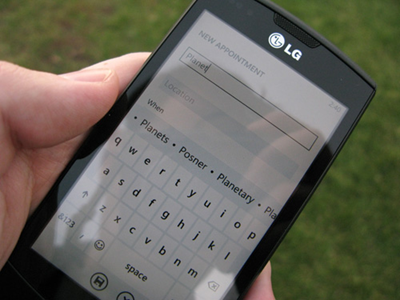
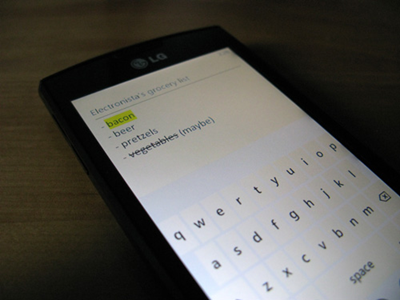
It's in e-mail that you get a good sense for the on-screen keyboard. The input here is a leap beyond what we saw for the Zune HD and is comparable to the best. At least on the Optimus 7's 3.8-inch display, the keys were nicely spaced and very responsive. It's possible to be a quick typist if you're experienced, especially since the keyboard is multi-touch aware and doesn't need you to let go of one key to move on to the next. Auto-correction is accurate, and there's a well-executed list of word suggestions as you type that can save time. We had to adjust slightly coming from an iPhone, but the learning curve is gentle.
Contacts are managed through the first of multiple hubs in the OS, the People hub. At its heart, it's much like a typical contact manager, but it also carries a layer of Facebook integration. If signed in, you can see others' status updates in a "what's new" section, make your own or check contacts you've recently accessed. Drilling down into an individual contact will show you both the requisite contact info and give you the option of checking their status updates or writing on their Facebook wall.
The People hub isn't the most extensive hub in the OS, and we'd like to see alternate services such as Twitter or LinkedIn make their way into the area. But it's more than what most offer, and it can even optionally filter to only add Facebook data to people who were already in offline contacts. Other smartphone platforms with Facebook tie-ins can often dump hundreds of unwanted contacts into the list, so it's appreciated to know that you can only see Facebook updates from real-world friends and associates if you like.
Calendaring is straightforward and taps into Exchange if you have it. The view of the next appointment on the home screen is its biggest selling point, though. It doesn't support multiple calendar types such as "home" or "work" and thus doesn't really prioritize events or handle overlaps very well.
Windows Phone 7: the Zune hub, syncing and the Games hub
Having had little success toppling Apple from its throne in dedicated media players, Microsoft has since turned Zune more into a platform than a whole device. Not surprisingly, the experience will be very familiar to Zune HD users, and the Metro interface is very well suited to filtering down by type, such as only TV shows or only certain music genres. There's a bonus if you have a Zune Pass for music, too: in those countries where it's supported, you can stream songs without having to download them. Microsoft is one of the few outside of Apple to have explicit podcast support, and on at least the Optimus 7 there's an FM radio. We're glad there's 16GB of built-in storage here; most WP7 hardware has just 8GB, so the lack of official microSD support early on won't be a barrier for most.
Controls have changed, but despite the more complex OS, largely for the better. There's no need to press a button to bring up on-screen audio controls. If music is playing, just going to the lock screen gives a quick set of controls and track details.
Like the Zune HD, you're limited to a proprietary app from Microsoft to sync your content, barring special apps that get around WP7's limitations. There's no drag-and-drop as there is on Android. The best experience, as you might imagine, comes from using the Zune software on a Windows PC. Apart from the usual media sync, including over Wi-Fi if you like, it gives you direct access to a storefront to buy apps, music and movies from the computer. None of the Zune Social components carry over, though, which definitely hurts adoption of what was once Microsoft's trademark music player feature.
Mac users will be surprised to note that Microsoft's mobile devices are no longer living in a Windows-only universe; there's now a dedicated syncing tool for them called Windows Phone 7 Connector. The app at its heart is a conduit that will pluck media from the iTunes library and relevant sources to send to the phone. It's very detailed considering the often simple nature of these apps and lets you filter syncs to particular playlists, artists or other criteria. Photos, podcasts and video also work, although Microsoft not surprisingly doesn't remember the last position in podcasts or videos to resume them later.
There's no calendar or contact sync owing presumably to different formats, but WP7 Connector is perhaps the only official sync app we've seen that gracefully shuttles photos and videos to iPhoto. Take new shots and, on sync, WP7 Connector will jump to iPhoto, import the images, and give the resulting event a helpful title. We didn't expect so much consideration; even iPhones have a longer (if more flexible) import process.
Although it could technically fall under apps, Microsoft has broken gaming out into its own dedicated hub that deserves some attention of its own. The decision helps keep the OS clean and puts games in a convenient section, but it's also key to some very tight integration with Xbox Live. Since you can sign in with the same account you'd use on your Xbox 360, you can play games (where supported) with your same friends list and earn achievements in-game that will contribute to your overall gamerscore. Even your avatar carries over, and a small number of games have full Xbox Live Arcade equivalents where experience in one counts towards the other.
Apple may have seen this coming and closed the gap considerably with iOS 4's Game Center, which has its own achievement system, friends list and multiplayer matching. Still, there's no denying that a frequent console gamer will get much more of a sense of continuity, even if Apple still has the advantage of a larger game library.
A quick note on gaming performance: we tried a few games to gauge the experience and performance, including 3D titles like Need for Speed: Undercover. Gameplay is as good as you'd hope for on a current smartphone, although we could tell that the frame rates in the most intensive 3D games wasn't as good as it would be on an iPhone 4 or a newer Android phone like a Samsung Galaxy S. Every initial Windows Phone 7 device is using a Snapdragon chip with relatively slow Adreno 200 video, which is certainly good enough to drive contemporary games but won't do as well as the PowerVR SGX535 or SGX540 in some other phones.
Windows Phone 7: Maps, the Office hub and Windows Marketplace
Bing plays a heavy role in search on the phone, and the Maps tool is a direct tie-in to the search engine's own code. It's here that some of the rush to get WP7 out for the holidays is fairly evident. Microsoft has a solid mapping system with satellite views (here "aerial view"), traffic and step-by-step directions, but Maps just isn't as thorough as on Android or iOS. There's no street-level view, no mass transit directions, and certainly no spoken directions as with Google Maps Navigation. The GPS did get a position lock quickly but needed to be outside to be accurate.
if there was one app or hub that truly disappointed us, though, it would be the Office hub. The portal provides basic editing and viewing for Excel, Powerpoint and Word documents, but the emphasis is certainly on "basic." Only a handful of font, cell value and other layout options exist in any one app, and the Powerpoint tool doesn't even allow creating a new presentation; you can only edit the text and other minor details. Aside from the ability to tap into a Sharepoint server, there's little that can be done in the Office hub that can't be done better in Documents To Go on multiple platforms or (eventually) iWork apps on the iPhone, even if these do or will cost money.
Windows Marketplace fares better. Like the iPhone's App Store, this is a much more controlled experience than the frequently chaotic experiences of Windows Mobile; apps have to be approved, and those that make it are given highlights or other special attention. Organization here sits in between Apple and Google. Apps get much more specific categorization than in Android Market and can have sub-categories, but discovery definitely isn't as easy as it is in the App Store's environment. We had a hard time finding apps that weren't either top sellers or recent.
This may prove a problem for the long term future of the store. Windows Marketplace has gotten off to a good start with over 2,000 apps as of this writing, but if users can't buy apps and make overnight successes like ngmoco (Rolando) or Rovio (Angry Birds), it may be difficult for the store to reach the 300,000-plus apps of the App Store or the 100,000 of Android Market.
A definite advantage does exist in the business model, though: trial apps. Android has no clear model, and Apple requires that developers build separate "lite" and full versions or else make a "freemium" app that requires an after-the-fact second download. WP7 can make a trial a subset of a full version; you can download the same content for free to test it out and pay to unlock the content already in the app on your phone. This may eventually have a standardized implementation in Android and iOS, but for now it's a Microsoft edge.
Windows Phone 7: what's missing
As mentioned earlier, Microsoft pressed hard to get its OS out the door for holiday 2010 and had to shed some features to get there. The stripped down Maps and Office components are some of these, but certain underlying OS features are gone that are either in competitors' offering or were in Windows Mobile.
For most, the conspicuous omission will be copy-and-paste. If you see a great quote, a convenient link or a funny photo, there's no way to simply grab that information and move it to the app of your choice. Microsoft does have some data detectors that will let you tap or press-and-hold to save the trouble of copying and pasting information. Even so, while we didn't have to worry about it often, it came up enough to realize that Android and especially iOS were setting expectations that occasionally let WP7 down. In a much appreciated gesture, however, Microsoft won't make users wait a whole year to get it back and is promising an update in early 2011 to add it back.
aLess than comforting is the near-term hope for multitasking. Today, WP7 is in much the same state as iOS was from 3.x and before. Microsoft's own apps have multitasking privileges and can fetch e-mail or play music in the background, but you can't stream Slacker radio like an iPhone now can or download a new e-book in the background like Android can. The omission isn't a showstopper, much as it wasn't early on in the iPhone's history, but with multitasking now implemented in simple fashion across most smartphone platforms, it's a definite disadvantage.
And for a company that emphasizes choice on the desktop, there isn't a lot of choice for services in mobile. You can't choose anything beyond Bing for built-in search (though Google has an optional app). Microsoft's financial stake in Facebook is conspicuous. We already mentioned that other social networking won't integrate into the People hub, but there's also no integration with Flickr or other photo services in the Pictures hub. The triage needed to get WP7 out on time may have played into this, but we'd like to see the broader choices from Google and, ironically, Apple.
LG's bundled apps and a Play To surprise
Microsoft has a tight rein on what companies can do to the OS and prevents them from customizing the interface itself. They can still preload apps, however, and LG has a number of tools out of the box.
Play To might be the most interesting, not least for a discovery we made out of curiosity. The Optimus 7 can stream content to another DLNA (Digital Living Network Alliance) device, such as a PlayStation 3 or many networked media hubs, including photos and video if it's technically capable. That level of sharing is only occasionally useful, but we were surprised to discover that it worked with a Sonos ZonePlayer S5 as well; the devices showed up as destinations and, as you would hope, would play music from the LG phone's collection. It's not as advanced as the iPad or iPhone apps, but having some functionality without an app at all was a minor treat.
Other apps are interesting, but not necessarily as effective or exciting. ScanSearch from olaworks is an augmented reality, GPS-based finder much in the vein of Layar or Yelp (the latter of which doesn't do augmented reality on WP7, at least not yet). Panorama Shot is slightly more clever, but also slightly flawed. It creates its namesake photos by taking a reference photo and then using the phone's relative facing to tell you where to move the camera next and automatically take the next shot until it finishes a 180-degree view. The app in our case made a panorama, but a broken one with images that didn't quite line up.
Finally, LG has decided to build in its own store-within-a-store section of Windows Marketplace. To be blunt, we're not certain why it exists other than to serve as a location for LG's free app giveaways. Only about 10 apps exist in the store as of November 2010, some of which were already preloaded while others were relatively simple (if useful) tools like Workout Tracker or a London Underground navigator. We like getting extra non-carrier apps with our phones, but with the exception of Play To, there's not much that immediately calls out to us on the Optimus 7.
Camera control and quality
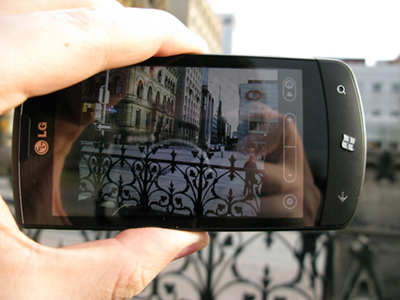
Much of the camera interface for the Optimus 7 is Microsoft's own and gives a fair amount of power over the shot, including color filters and white balance. LG adds a few extras of its own, such as the Panorama Shot app we mentioned earlier and a beauty shot mode that tunes settings to favor portraits. That's largely good, and we like both the very simple swipe between capture and playback and the ability to start the camera app just by holding the camera button for a few seconds; concert goers or impulse photographers may like this phone and WP7 for that reason alone.
A few other perks manifest themselves as well. Every WP7 user gets a free Microsoft SkyDrive account with 25GB of storage. If you want, you can have photos or videos automatically upload to the SkyDrive or to Facebook and make them as private or as public as you'd like. It's a double-edged sword, so we'd advise against making media public if you're prone to taking embarrassing shots, but there's no question that it's a step above the manual steps needed for Android or iOS photos. Again, we do wish more destinations were available.
One major flaw dampens the experience, though, and that's the inability to save camera settings. Every time we took a photo, we had to turn image stabilization on; every time we recorded a video, we had to change the resolution to 720p. At first we though this might be an LG-specific bug, but it's also an issue for Dell Venue Pro phones as well. Hopefully this bug will be fixed in short order, but until then, be prepared to lose image quality when you don't have time to readjust the settings.
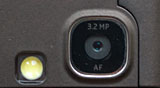
Actual image quality out of the five-megapixel camera is good, if still symptomatic of classic camera phone problems. Images only produced mild evidence of the "smear" effect from a low-cost lens, little noise and relatively little color fringing in high-contrast scenes, but we noticed that the Optimus 7 sometimes didn't expose the shot as well as you'd expect. Macro photography also seemed to be off-limits. We tried to get close and refocus, but the camera preferred medium to long distances for its subjects. There's no lens measurements, so we can't tell what its minimum focusing distance is other than more than one foot.
Video quality encounters similar issues, although it passed muster often enough. The image quality itself is good compared to most phones and keeps up with a minimum of blur, compression artifacts or juddering, but LG's choice of sensor tends to overcompensate for changes in the necessary exposure as you move from light to dark. Audio is also strictly adequate and, in our checks, occasionally overwhelmed the microphone with moderately loud sounds. We'd recommend against taking the Optimus 7 to a concert if your goal is to preserve the audio as much as the view of the stage.
Call quality and battery life
As an actual phone, the Optimus 7 manages above-average quality. It wasn't exceptional during our testing, but calls were clear on both ends with some moderate noise in the background. The speakerphone isn't very powerful, so we wouldn't depend on it for holding a meeting or a conversation in a busy office.
Battery life is solid in spite of WP7's early nature. It's still the case that you'll want to recharge the phone every day if you want to guarantee a typical full day, but moderate use during an average stint at the office wouldn't empty the battery. We also noticed that the default e-mail sync interval of 30 minutes didn't have a major impact on battery life, and the phone if left overnight would lose about 15-20 percent of its charge. LG may not have had a choice but to use LCD, but given the battery-hungry nature of Samsung's Super AMOLED technology in the Focus, we suspect things have worked out for the best.
Wrapping up
As this review is as much about the OS as the phone, our thoughts can't help but turn to Windows Phone 7 and Microsoft's future first.
In its current state, the OS is rough around the edges and isn't quite where it needs to be to spark much fear in Apple and Google. Without multitasking and a number of apps that were clearly rushed along for the sake of making a deadline, this OS is more of a 1.0 than a 7; Microsoft admitted as much before launch. Updates will change that in time, and thankfully WP7 is designed to avoid the delayed updates and fragmentation that have plagued Android and Windows Mobile.
Nonetheless, buying a phone on a promise of improvements is always a big gamble. Just ask HTC Hero and Samsung Behold II owners who found themselves stuck on old Android versions less than a year after a purchase. There's no guarantee that Microsoft will be fully caught up to Apple and Google in the completeness of the interface, underlying features or app support in the near future, if ever. The iPhone already has built-in video chat with Google close behind, for example, while support for a front camera isn't even known to be on the horizon for Microsoft.
With all this cynicism, we had to admit that we genuinely enjoyed using WP7 most of the time, which is something we could never have said for Windows Mobile. It's highly visual, it's intuitive, and it might even be called fun. More importantly, it's astounding to realize that historically over-conservative Microsoft has just put out a mobile OS that clicks and yet which doesn't fit into any traditional expectations for what a phone interface should look like. If the developers can keep up the pace, WP7 can be a leading OS in the next few years.
As for the Optimus 7, we're inclined to believe that it's one of the better launch phones and one of the best smartphones LG has ever made. Camera quality could still improve, and that Windows key could be made of sturdier material, but the phone design comes across as a labor of love that would have been unthinkable of LG a year ago. Tossing aside the dubious value of the extra software, the hardware quality is a step above that of competitors like the HTC Surround and Samsung Focus.
Should you spend $100 on contract in Canada or choose the phone as your free-with-plan example in Europe? At those prices it might not be enough to get you to give up an Android phone or an iPhone if you already know your preferences, but if you're not committed and don't have exacting requirements for navigation and Office documents, it could well be worth a try. When it's such a promising start, riding the first wave of a new platform can be exciting by itself.